
Summary: Humanoid robots are no longer just demos or sci-fi concepts. They’re beginning to walk, talk, and operate in human spaces like homes, offices, and stores. That changes how people respond to them emotionally and ethically. This page explores why general-purpose humanoids feel “too human,” what’s different about this moment, and how to make sense of robots becoming part of everyday life.
Key Takeaways:
- Humanoid robots are now showing up in personal spaces like homes and offices
- As these robots become more lifelike with their behavior, it influences how people respond
- Feeling uneasy can help clarify what role robots should (and shouldn’t) play in daily life
Updated: April 6, 2026
Humanoid robots feel “too human” right now because they’re starting to move, act, and show up in real-world spaces in ways that blur the line between machine and person.
As a kid, my version of the future was having Rosey the Robot from “The Jetsons” do the cooking and cleaning. Meanwhile, my husband has been dreaming of having androids and humanoids walking among us thanks to his childhood watching “Star Trek.”
But scrolling online, the humanoid robots that I see that move, talk, and gesture like real people are kinda weirding me out.
It’s not that I’m anti-tech. It’s just that something feels off about a lot of these general-purpose humanoids.
I can’t help but wonder: Are humanoid robots getting too human? And if so, do we really want that?
Why Humanoid Robots Feel “Too Human” Right Now
For a long time, humanoid robots were a far-off possibility that mostly lived in sci-fi, lab demos, and the imagination of people who wanted the future to hurry up already.
Then, around the early 2020s, they became a reality, especially when AI and ChatGPT took off.
That shift helps explain why so many people feel weird about them. It’s not just that robots exist. It’s that they’re starting to show up in human spaces, act in human ways, and blur the line between us and them.
That reaction overlaps with the uncanny valley, and also helps explain why some robots feel creepy in the first place.
Here are three big reasons humanoid robots can suddenly feel a little too human.
1. They’re being designed for our real-life spaces
It’s one thing to see an industrial robot that looks clearly mechanical. It’s another to see humanoid robots starting to show up in environments meant for people.
General-purpose humanoids are no longer confined to labs or factories. They’re being built for homes, offices, hospitals, stores, restaurants, schools, and other everyday spaces where we never had lifelike machines moving, watching, or responding.
2. They mimic human behavior
Along with looking like us, many humanoid robots mimic our actual behavior. They pause, look at us, gesture, and react like people.
Even when we know there’s no real emotion behind it because AI robots do not have feelings, our brains still register those cues as human. That’s where things start to feel blurry.
3. They’re showing up alongside regular people
Then there’s proximity. The closer these robots get to ordinary life, the more people start asking different questions, like what is it doing here? Can I trust it? Is it recording me? Is it meant to help, replace, or monitor me?
That’s why the conversation has changed. Humanoid robots are no longer just futuristic concepts. They’re getting closer to our everyday spaces, and for a lot of people, that feels too close for comfort.
What Is a General-Purpose Humanoid (and Why Are They In Homes)?

A general-purpose humanoid robot is one that’s intended for all sorts of environments, including offices, stores, airports, and homes.
These robots are built to look and move like us: walking upright, using expressions, and even holding conversations. As for the companies making humanoids, they’re not exactly easing us in. They’re racing to one-up each other like there’s no tomorrow.
Which brings me back to my main question: Are humanoid robots getting too human-like? And if so, what exactly are we hoping to recreate?
If you’ve ever wondered why builders keep insisting on the human shape in the first place, here’s my breakdown of why humanoid robots are the design so many folks are betting on.
Which Companies Make the Most Humanlike Robots?
If you’ve seen videos of robots walking like humans or chatting with eerie calm, chances are one of these companies listed below was behind it.
These examples are helpful for understanding what’s happening right now, although the bigger story is about what happens when robots start feeling like presences rather than tools.

Figure AI: This California-based company introduced Figure, a general-purpose humanoid designed to work alongside humans in everyday settings. With its black plastic face and fabric exterior over a padded metal frame, it walks, listens, and handles household tasks.
AgiBot: If you search for “Chinese humanoid robot,” this company will most certainly show up. AgiBot has created the A2, which moves with surprising agility. It looks more like a stormtrooper than a human, but still gives me the creeps ‘cause it seems so smart.
Unitree Robotics: The G1 humanoid bot from Unitree is often in the headlines because it’s one of the most affordable humanoids at the moment. It’s also one of the only humanoid robots for sale right now.

Apptronik: This company based out of Austin, Texas, has created the Apollo humanoid robot designed to help in retail and manufacturing. Because it has two cameras for eyes and no mouth, it actually looks more cute than creepy to me.
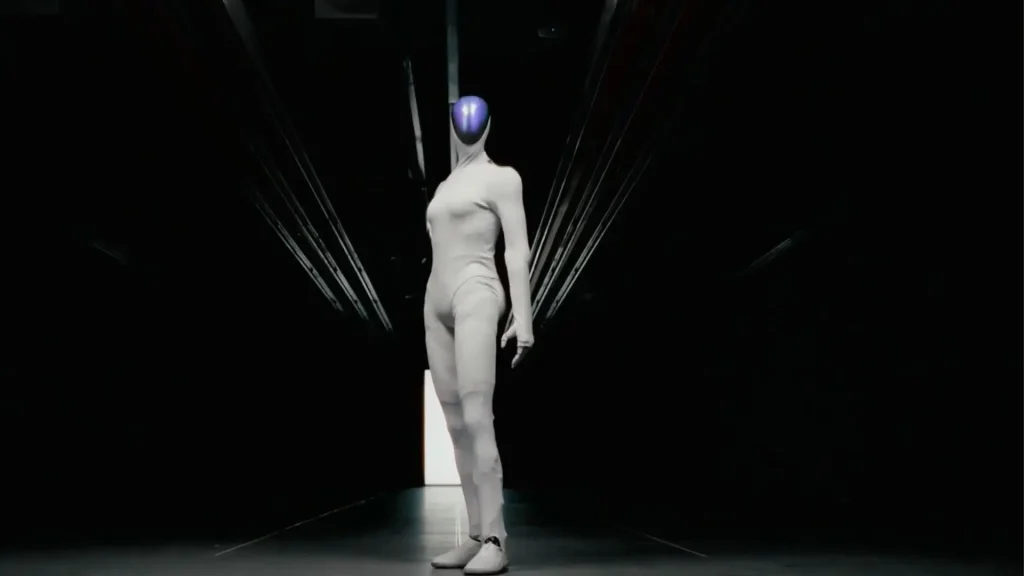
1X Technologies: This Northern California company created NEO, the first ready-to-order household humanoid that walks, sits, and does chores like a human. It looks like a sci-fi fencer with its soft knitted body suit, realistic movements, and simple black plastic panel face. En garde!
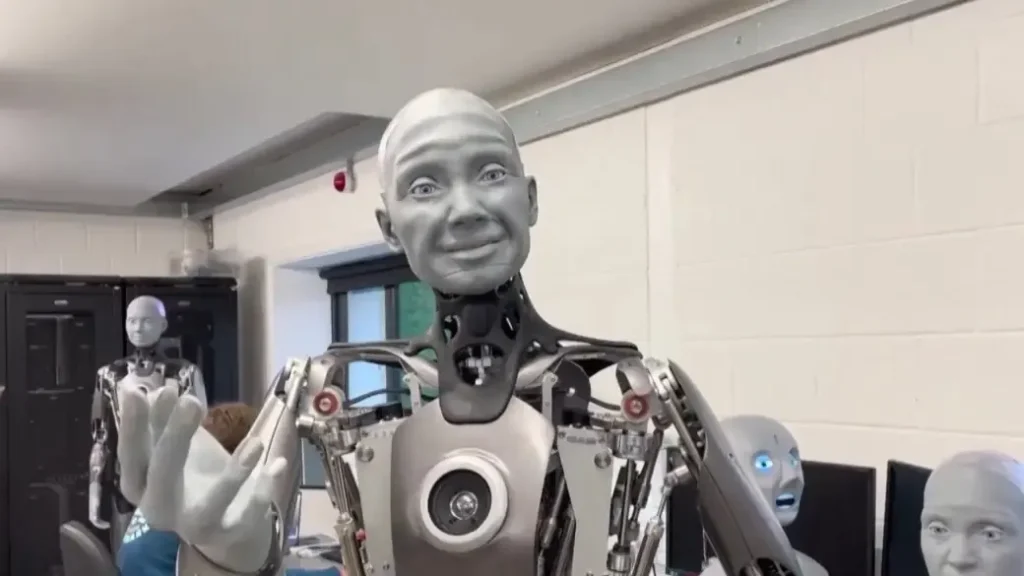
Engineered Arts: The UK-based creators of Ameca must be proud of themselves for creating one of the world’s most human-like bots that blinks, smirks, smiles, furrows its brow, and even makes sarcastic faces. The likeness is not threatening, exactly. It’s just a bit unnerving.
These companies are pushing the boundaries of what robots can do and how human they can seem while doing it. That doesn’t automatically mean they’re bad or dangerous. But it does mean we’re inching into a gray area, emotionally and ethically.
If you want the broader landscape, I keep an updated list of the companies building these humanlike robots.
Do You Really Want a Robot That Looks So Human?

Like it or not, we have to accept that robots are now a part of our reality. Eventually, you might even want one to carry groceries, do dishes, or help around the house.
But for many people, there’s a line.
We’re far more comfortable with robots that look like machines and don’t try to pass as people. In fact, a survey reported by Euro News found that most respondents “don’t want robots to resemble people, or even have human traits like limbs or a face.”
That doesn’t mean robots shouldn’t feel approachable. A friendly tone or simple gesture can make interactions easier. But when a robot starts to look and behave too much like a person, it can quickly slip into the uncanny valley — that moment where something suddenly feels off.
That’s a completely normal reaction, too. Recent research has shown that parts of the brain associated with reward can actually produce negative responses when something appears highly human, but not quite real.
The takeaway is simple: many of us want help from robots, but we’re not looking for a substitute for real people.
Why Privacy and Boundaries Start to Feel Different

One of the things that unsettles me most about humanoid robots getting too human is how easily they could blend in and how easily we could let our guard down.
It’s not hard to imagine a “friendly” home robot also surveilling your space, logging your preferences, and uploading conversations to the cloud.
Our phones and home assistants like Alexa already track, listen, and learn from us. But when you add a body (aka embodied AI), familiar facial expressions, and a humanlike voice, it suddenly feels way more intimate.
When something feels real but isn’t, it creates a strange emotional dissonance.
For example:
- Do I say “thank you” to a robot because it acted kind?
- Do I feel rude ignoring it when it turns toward me?
- Am I being emotionally manipulated by well-trained design?
These questions aren’t just theoretical anymore. When it comes down to it, these concerns are some of the top reasons people don’t trust robots.
In Summary: Why “Humanoid Robots Getting Too Human” Is a Valid Concern
Humanoid robots are moving out of demos and into everyday life, and that’s why this conversation feels more urgent now.
It’s not just about how human they look. It’s about how they behave around us, the social cues they mimic, and how easily we start to treat them like something more than a tool.
You don’t have to be anti-robot to feel uneasy. That reaction is a signal. It helps you decide what kind of role you actually want these machines to play before they become part of daily life.
FAQ
Are humanoid robots going to replace humans?
Not exactly. Most humanoid robots today are designed to assist with specific tasks, not fully replace people. But as they become more capable and human-like, they do raise real questions about jobs, identity, and how much responsibility we want to hand over.
Why do some humanoid robots feel more unsettling than others?
It usually comes down to how closely they mimic human appearance and behavior. Small mismatches in movement, facial expression, or timing can make a robot feel “off,” even if you can’t immediately explain why.
Is it better for robots to look human or machine-like?
It depends on the use case. Many people feel more comfortable with robots that clearly look like machines. When robots try to look too human, expectations go up and even small imperfections can feel unsettling.
Are humanoid robots already being used in homes?
They’re starting to move in that direction, but most are still in testing or early deployment. Some companies are building general-purpose humanoids specifically for home environments, which is part of why this conversation feels more immediate.
I’m Still Asking Questions (and Maybe That’s the Point)
So, are humanoid robots becoming too human for our own good?
I set out to answer that question, and ended up with more questions than I started with. But maybe that’s the point.
My husband and I are navigating this from different ends of the spectrum — he’s a Robot Enthusiast, and I’m more Robot Hesitant.
That’s exactly why we created this website Robots: Good or Bad. To think out loud, ask real questions, and figure out where we stand as this technology becomes part of everyday life.
Curious where you fall on the spectrum? Our Life With Robots page explains how we think about the Robot Readiness spectrum.


