
Summary: Robots feel weird for a lot of reasons — and the uncanny valley is only one of them. Pop culture taught us to fear robots, smart devices normalized surveillance, and today’s humanoids blur the line between tool and companion. That uneasy feeling often reflects deeper questions about trust, control, and identity.
Key Takeaways:
- Pop culture primed us to see robots as threats long before they became part of our reality
- Smart home tech blurred the line between convenience and surveillance
- Feeling uneasy can be a signal to think critically rather than a reason to reject robots
Updated: February 18, 2026
Why do robots feel weird?
For many of us, that reaction didn’t start with real-world robots. It started with stories. We grew up watching machines turn evil, take over, or quietly replace people. Long before humanoid robots were for sale, they were already framed as threats.
I want to like robots. I really do.
They’re helpful and efficient in industries like healthcare, agriculture, and manufacturing. Sometimes there are even cute robots.
But every time I see a humanoid dancing or mimicking human behavior, something in me tenses.
It’s not outright rejection. It’s more like a subtle alarm that something about this feels off.
Now we’re entering an era where robots may help care for our aging parents … and eventually us. The technology is improving fast, yet the discomfort lingers.
Instead of brushing that uneasy feeling aside, it’s worth exploring where it comes from, why that matters.
Because like it or not, robots are here. And more are coming.
Here are six reasons why robots feel weird.
Is It Just the Uncanny Valley?
Sometimes, yes.
A big part of why robots feel weird is the “uncanny valley,” a term that psychologist Masahiro Mori coined in 1970. It describes that eerie feeling you get when something looks almost human, but not quite. The closer a robot gets to realism without fully pulling it off, the more unsettling it can become.
What makes it worse is mismatch:
- A human-like face with non-human timing
- Realistic skin with lifeless eyes
- Friendly words with stiff, unnatural movement
Your brain expects “person,” but it gets “machine,” and it doesn’t know where to file it.
If you want the deeper explainer with examples, read: What Does Uncanny Valley Mean?
Here’s the key point:
Even robots that don’t look human can still feel weird. Which brings us to the bigger list.
1. We Grew Up With Scary Robots on Screen

If you came of age in the ’80s or ’90s, your earliest impressions of robots weren’t warm and fuzzy. You probably remember iconic films like “The Terminator” and “RoboCop” where the vibe was dark and dystopian. Not exactly feel-good Mary Poppins movie fare.
Even the more recent “Ex Machina” and “M3GAN” echo the same themes: robots meant to help us eventually harm us.
Yes, we had some friendlier examples in “Short Circuit” (Number 5 is alive!) or even “Rocky IV” when Rocky got rich and could afford a home robot, but those were the exceptions.
The overriding message was always that robots weren’t just tools, they were threats.
So it makes sense that something deep inside us still flinches, even when today’s robots look more like helpful assistants than futuristic assassins.
If you’ve ever wondered why you’re afraid of robots even though you’ll probably eventually get one, blame Hollywood.
2. Robots Remind Us That Tech Is Watching (and Listening)
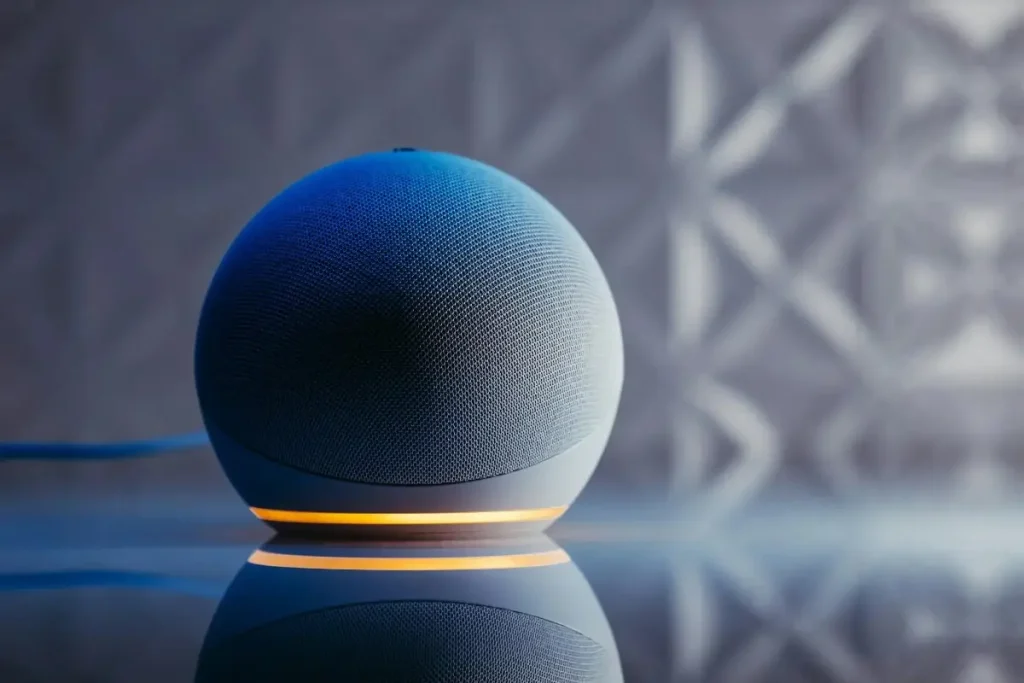
As much as we like the convenience of smart devices, let’s be honest: they’re always listening. Literally. I’ve had Alexa respond when I wasn’t even saying the wake word.
Like, how do you mistake “having lunch” for “Alexa”? Seems sus, sis.
Even though I resisted having this device in our home, my husband, who’s a Robot Enthusiast, brought in two without a second thought. Now that damn device is just part of life, like social media, smartphones, and the internet itself.
I didn’t grow up with this kind of tech. None of us did. So yeah, robots feel weird because they’re always there.
And for those of us who value privacy, it’s hard to shake that creepy feeling that Big Brother Tech is watching.
3. Robots Can Now Care for Our Aging Parents (And Us)
This is the part that gets real real. When I think about how robots can help the elderly, it makes me pause. Because tech has become a critical part of the aging conversation.
My husband and I talk about robots and aging a lot: his dad is 90 years old (and still going amazingly strong), his mom lives on her own, and neither of us is getting any younger.
Robots could be part of the solution. And yet it’s a big leap emotionally.
That’s why I explored this in “Ready for a Robot? 4 Signs and a Practical Checklist.”
4. We Worry About Our Jobs

As a professional writer and editor for the past 20+ years, it’s jarring to see how fast AI can churn out passable content.
It feels like someone barged in, took my laptop, and started drafting in my voice … with just as many em dashes! (I’ve loved em dashes for years, so I’m totally appalled that so-called AI writing detectors consider this a red flag. Bot, bye!)
I still believe that human judgment, empathy, and creativity are going to matter in the age of ChatGPT and other AI tools. Probably now more than ever.
But when you see your industry changing overnight, it’s easy to feel like the new tech is a threat rather than a tool. Just like in all those movies we grew up watching. (Life imitating art? Hmm … seems like it.)
Automation is efficient, but it’s also unsettling. It’s one of the top reasons people don’t trust robots, and I can tell you it’s not paranoia, it’s lived experience.
5. The Tech Is Real, So Resistance Feels Futile
Robots are here, there’s fear, get used to it. Just like we adapted to the internet and smartphones, we’ll adapt to robots. Not because we’re 100% ready, but because we have to.
Consider this: More than 5.5 billion people use the internet worldwide, and over 90% of them access it via smartphones. Remember life before cell phones? Yeah, neither do I.
Back in the day, I didn’t want to join social media, but my job required it. Now I scroll and post like everyone else. I didn’t want Alexa, but now I’m asking her about the weather or what time it is. (Although truth be told, I’m ready to give that bot the boot.)
Resistance might be natural, but eventually, we adapt or get left behind.
6. We’re in an Emotional Tug-of-War
I’ve been talking to a lot of friends lately about this whole robot thing, and it’s common to feel uneasy and still be open. You can be hesitant and curious. That’s where I am, and clearly I’m not alone.
This emotional in-between space is why my husband Aram and I started this website in the first place.
Like so many things in life, robot readiness really lies on a spectrum. It’s not a black-or-white or yes-or-no issue. It’s about spending time in the nebulous gray area. Asking questions. Sharing real stories. And figuring out what you can (and can’t) trust about living with robots.
Whether you’re curious about robot pets versus real ones, or just starting to explore the idea of what life with robots will mean for us, there’s space for all of it.
Robots Feel Weird and That’s Totally Normal

The only reason we’re even having this conversation is because robots are no longer hypothetical.
They’re here. They’re multiplying. And like social media, smartphones, and AI tools, they’re becoming harder to ignore.
Maybe you’re not ready for a full-on humanoid robot (I’m definitely not), but a small home bot that slices tomatoes? Maybe.
Feeling weird about robots can be a sign you’re not accepting change blindly. You’re asking how that change fits into your life, your family, and your values.
We’ve been here before. Every wave of innovation sparks fear, doubt, and debate. Then, slowly, comes adaptation.
That might mean welcoming a robot into your home or deciding not to. Either way, it’s important to keep paying attention to what feels weird, and why.
That might mean welcoming a robot into our home — or deciding not to. Either way, it’s worth paying attention to what feels weird and why.
If you want to go deeper, check out our Robot Readiness research: how we define it, what themes keep showing up, and where different kinds of hesitation tends to come from.
FAQ
Why do robots feel weird?
Robots feel weird when they blur the line between object and person. The uncanny valley is one reason, but so are surveillance concerns (always-on devices), job fears, and the emotional confusion of interacting with something that acts social without being human.
What is the uncanny valley?
The uncanny valley is the uneasy feeling people get when a robot or digital character looks almost human, but not quite. That near-human realism can trigger discomfort, especially when facial expressions, timing, or movement don’t match what we expect from a real person.
Can robots feel feelings?
No, robots do not have feelings. Robots can simulate emotions through voice, facial expressions, or “empathetic” responses, but that’s not the same as experiencing feelings. The emotional experience is real for us, even if the robot is running patterns and scripts.
Why do I feel bad for robots?
People empathize with anything that seems social or vulnerable. If a robot appears lonely, sad, ignored, or mistreated, our brains often respond the way we would with a living creature even when we know it’s a machine.