

Summary: Today’s top humanoid robots are real, functional machines, not just concepts. This list highlights real humanoid robots built to work safely with people in factories, homes, and research labs.
Key Takeaways:
- Most humanoid robots you see online are still prototypes, but those on this list are already working in warehouses, labs, or homes
- These humanoid robots range from industrial helpers to expressive androids made for human interaction
- The companies behind the top humanoid robots are shaping how robots will eventually live and work alongside us
If you’ve been scrolling through clips of robots that walk, talk, or work and wondering which of them are actually real, you’re not alone.
To give you a helpful overview, this list focuses on top humanoid robots that are working on factory floors, assisting in research labs, or being tested for home or public use.
In some cases, that work still involves teleoperation or human guidance behind the scenes, which is an important reminder that “real” does not always mean fully autonomous.
Although they’re not all humanoid robots you can buy right now, these machines offer a glimpse of our near future where human-shaped robots are part of everyday life.
A–Z List of the Top Humanoid Robots (2025)
The following list is inspired by the acclaimed MERPHI poster that highlights the most notable humanoid robots. It’s not meant to be exhaustive, and we’re not including futuristic renderings or protypes that exist just for research demos.
Instead, we’re focusing on real humanoid robots that are actually functioning today. We’ve organized it in alphabetical order, so you can easily skim, search, and see what’s going on in the rapidly changing world of humanoid robotics.
If you have any suggestions of other humanoid robots we should add, by all means let us know!
Ameca
Company: Engineered Arts
Where It’s Made: United Kingdom
Use Case: Research, public interaction, social robotics
Robot Size: 5 ft 7 in (170 cm)
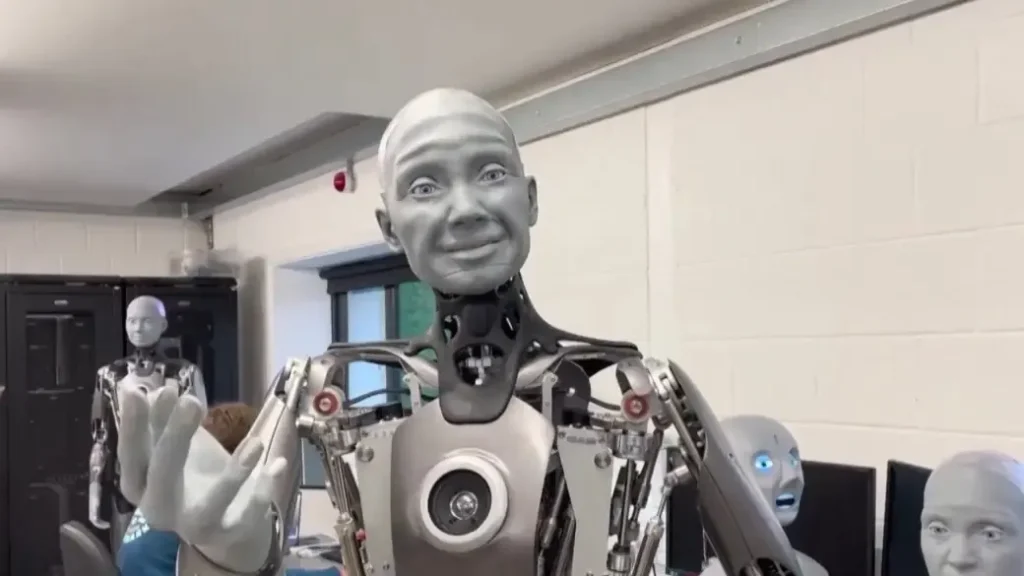
Ameca is best known for its hyper-realistic facial expressions and advanced conversational AI. Designed to study human-robot interaction, it frequently appears at tech showcases, museums, educational demos, and even fashion shows. Unlike most of the humanoids on this list, Ameca doesn’t walk yet. “She” typically remains stationary as a torso and head or is mounted on a wheeled base.
Apollo
Company: Apptronik
Where It’s Made: United States
Use Case: Warehouse logistics, human–robot collaboration
Robot Size: 5 ft 8 in (173 cm)

Apollo is a versatile robot built for moving boxes, pushing carts, and performing repetitive warehouse jobs. It’s currently working in pilot programs at manufacturing facilities, including Mercedes-Benz in Hungary and Germany. Apollo has a modular structure that can swap out limbs or hands for specific tasks.
Atlas
Company: Boston Dynamics
Where It’s Made: United States
Use Case: Research, mobility and balance testing
Robot Size: 5 ft 2 in (157 cm)

Atlas is the agile, parkour-performing humanoid from Boston Dynamics (owned by Hyundai Motor Company since 2021) that redefined what a robot can do. The latest all-electric model moves more smoothly, quietly, and efficiently than the earlier hydraulic versions. You can’t buy one yet, but Atlas is the robot that pretty much set the internet’s standard for what “agile” really means.
Borg 01
Company: Borg Robotics
Where It’s Made: United States
Use Case: Home assistance, service robotics
Robot Size: 5 ft 6 in (173 cm)
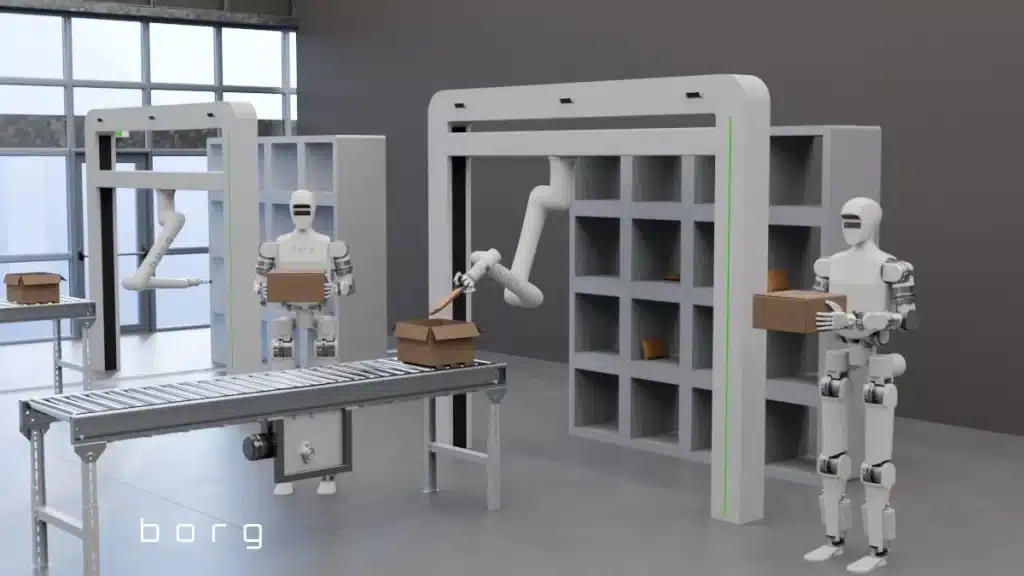
Built in Detroit, the Borg 01 is an American-made humanoid designed for factory and warehouse environments. It has a modular design that can switch between a bipedal walking base and a wheeled platform, with swappable tool attachments for different tasks. It’s part of a larger automation lineup that works alongside autonomous pallet movers and forklifts.
Clone Alpha
Company: Clone Robotics
Where It’s Made: Wroclaw, Poland
Use Case: Home assistance, household automation
Robot Size: 5 ft 7 in (170 cm)

Clone Alpha is one of the most ambitious (and frankly the wildest!) humanoid projects on the market. What makes this “musculoskeletal android” especially unusual is its focus on the home. Each android comes with a set of pre-installed skills—like memorizing your home layout, unloading the dishwasher, pouring drinks, setting the table—and a Telekinesis training platform that lets owners teach the robot new tasks over time.
Digit
Company: Agility Robotics
Where It’s Made: United States
Use Case: Warehouse logistics, commercial automation
Robot Size: 5 ft 9 in (175 cm)

Digit is one of the first humanoid robots actually working in the real world, with pilot versions at Amazon and other logistics companies. Its design focuses on utility, not human likeness—featuring two legs, two arms, and a sensor-packed “head” built for safety and reliability. Digit proves that humanoids don’t have to look too human to function in everyday environments.
DR02
Company: Deep Robotics
Where It’s Made: China
Use Case: All-weather inspection, cargo transport, emergency response
Robot Size: 5 ft 9 in (175 cm)

Touted as the first fully waterproof and dustproof humanoid, the DR02 is suitable for harsh outdoor and industrial conditions. It operates across a wide temperature range (-4°F to 131°F) and includes a quick-detach modular design that lets technicians swap out limbs and reduce maintenance downtime. It’s already being deployed for security patrols and factory operations.
Elix
Company: Addverb AI
Where It’s Made: India
Use Case: Logistics, warehousing, healthcare, retail
Robot Size: 5 ft 7 in (168 cm)

The heavy-duty Elix is a general-purpose humanoid built for tough, repetitive, or hazardous work. It features dexterous five-fingered hands, up to 41 degrees of freedom, and weighs roughly 165 pounds. Elix shows how humanoids can take on physically demanding jobs that would be strenuous or risky for humans.
Figure 03
Company: Figure AI
Where It’s Made: United States
Use Case: Household chores, general-purpose assistance
Robot Size: 5 ft 8 in (172 cm)

Figure 03 is one of the best-known humanoid robots designed for household tasks like loading dishwashers, carrying groceries, or handling repetitive chores. Figure appeared on the cover of TIME’s “Best Inventions of 2025″ issue (the magazine is owned by a major Figure investor), representing a bold attempt to bring humanoid robots into everyday life.
4NE-1
Company: Neura Robotics
Where It’s Made: Germany
Use Case: Industrial automation, collaborative robotics, household tasks
Robot Size: 5 ft 9 in (175 cm)

Neura Robotics’ 4NE-1 is an adaptable humanoid built for both industrial and home environments. It integrates advanced sensors that let it perceive depth, touch, and proximity in real time. 4NE-1 has exchangeable forearms and comes in specialized versions for different use cases, including wheeled models for more mobility.
Iron
Company: XPeng
Where It’s Made: China
Use Case: Commercial and industrial
Robot Size: 5 ft 10 in (178 cm)
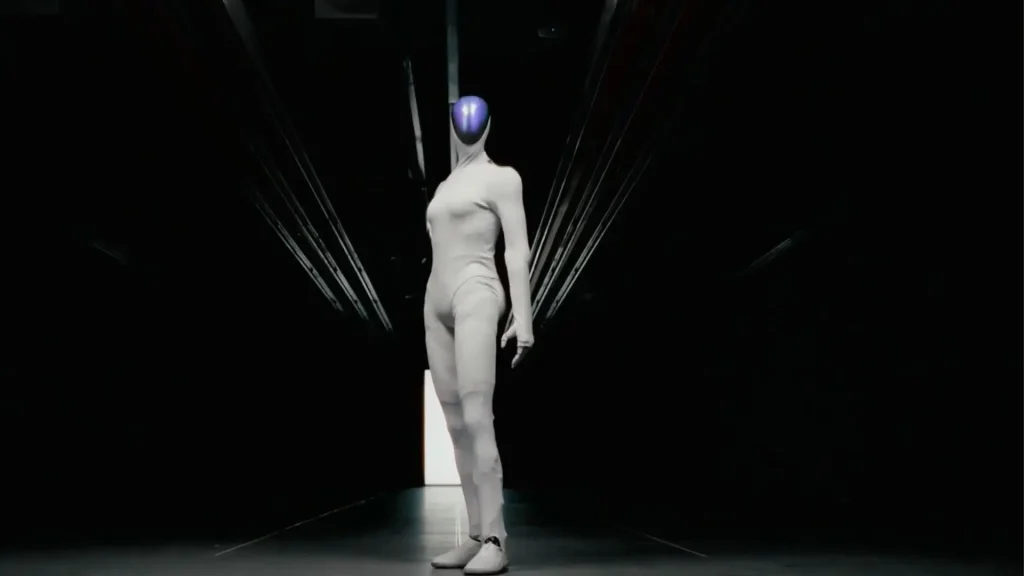
The XPeng Iron robot moves and acts almost like a human with a soft synthetic, flexible spine, and artificial muscles that let it walk smoothly. Powered by three advanced AI chips, the company says Iron can see, understand, and respond in real time. The humanoid is intended for places like factories, officies, and stores. It could also become a “female humanoid robot” as Xpeng plans to let customers customize Iron’s look, including body shape and gender.
LimX Oli
Company: LimX Dynamics
Where It’s Made: China
Use Case: Mobility research, industrial applications
Robot Size: 5 ft 9 in (175 cm)

LimX Dynamics’ Oli is a research-grade humanoid designed to study walking and balance in complex environments. Powered by advanced motors and sensitive joint sensors that mimic human motion, it focuses on navigation and terrain testing rather than social interaction. Oli’s smooth, natural movement has made it popular in robotics research circles.
NEO
Company: 1X Technologies
Where It’s Made: Norway
Use Case: Home assistance, teleoperation, workplace safety
Robot Size: 5 ft 6 in (168 cm)

NEO from 1X Technologies made headlines in November 2025 when it became one of the first household humanoid robots for sale. With its soft-knit body, flexible joints, and light weight (it’s only about 66 pounds), NEO is suitable for homes. It can do certain household chores autonomously, although right now most need to be done via remote operation by a human “pilot.”
Optimus Gen 2
Company: Tesla
Where It’s Made: United States
Use Case: Manufacturing, general-purpose automation
Robot Size: 5 ft 8 in (173 cm)

Tesla’s Optimus Gen 2 (aka Tesla Bot) is a slimmer, lighter upgrade to the original model revealed in 2021. The company’s long-term goal is for Optimus to work autonomously on its own assembly lines, supporting large-scale manufacturing. Optimus isn’t for sale, but it’s still one of the most closely watched and widely recognized humanoid projects.
Phoenix
Company: Sanctuary AI
Where It’s Made: Canada
Use Case: Commercial service, multipurpose assistance
Robot Size: 5 ft 7 in (170 cm)

Sanctuary AI’s Phoenix is designed as a “cognitive” humanoid—a robot that combines physical dexterity with reasoning and memory. Phoenix has performed real-world tasks like stocking shelves and picking items in stores. Its key innovation is the Carbon AI system, which lets the robot learn from human feedback and apply that knowledge to new situations.
PM01
Company: Engine AI
Where It’s Made: China
Use Case: Education, commercial training
Robot Size: 4 ft 5 in (138 cm)

The PM01 is marketed as the world’s first “natural-gait” humanoid, available in both educational ($25,500) and commercial ($39,500) versions. With its modular design, built-in touchscreen, and a suite of sensors, PM01 is positioned as an accessible, flexible platform for AI and motion research across both academic and commercial settings.
iRonCub
Company: Italian Institute of Technology (IIT)
Where It’s Made: Italy
Use Case: Research, locomotion, aerial robotics
Robot Size: 4 ft 9 in (150 cm)

The iRonCub is an academic humanoid created by Italy’s IIT to explore flying robots for disaster response. In August 2025, this jet-powered humanoid completed a 20-second hover about 1.6 feet off the ground. It’s not autonomous or ready for commercial use yet, but researchers hope it could one day help in disaster zones, rescue missions, and toxic environments.
Sophia
Company: Hanson Robotics
Where It’s Made: Hong Kong
Use Case: Entertainment, education, research
Robot Size: 5 ft 7 in (170 cm)

Hanson Robotics’ Sophia became famous for her expressive face and high-profile public appearances, including interviews and talk-show cameos with people like Jimmy Fallon. While Sophia doesn’t have a full body, “she” popularized the concept of social robots and remains one of the leading examples of a humanoid built for conversation and emotional expression.
Unitree G1
Company: Unitree Robotics
Where It’s Made: China
Use Case: Research, education, personal robotics
Robot Size: 4 ft (127 cm)

Unitree’s G1 is a compact, budget-friendly bipedal robot that’s become a social media star thanks to its dancing, running, and acrobatic moves. Priced around $21,600, it can walk, run, crouch, and even flip while maintaining balance. G1 doesn’t yet have full robot hand dexterity or speech, but its price and availability make it one of the few humanoids everyday people can actually buy right now.
Walker S2
Company: UBTech Robotics
Where It’s Made: China
Use Case: Service, hospitality, research
Robot Size: 5 ft 6 in (168 cm)

UBTech’s Walker S2 is a full-size humanoid designed for indoor service and demonstrations. It can walk smoothly, carry light objects, and perform tasks like opening doors or greeting guests. UBTech has showcased Walker at major trade fairs, positioning it as a smart-home and business-service platform rather than an industrial machine.
Yogi
Company: Cartwheel Robotics
Where It’s Made: United States
Use Case: Home assistance, companionship, research
Robot Size: 4 ft 8 in (142 cm)

California startup Cartwheel Robotics is developing Yogi as a compact, kid-friendly humanoid for household help and social interaction. Its design focuses on approachability with rounded edges instead of raw strength. Yogi reflects a new wave of American humanoids built to feel natural in the home without veering into the uncanny valley.
Today’s Top Humanoid Robots Are Just the Beginning
Looking across today’s top humanoid robots, one thing is clear: the age of functional, human-shaped machines has begun.
Some are built to move pallets or stock shelves; others are learning to hold conversations or assist in daily routines.
None of these robots are perfect and most aren’t available or affordable yet. But each one brings us a little closer to seeing humanoids as part of daily life.
In Summary: What the Top Humanoid Robots Show Us
Top humanoid robots are no longer science fiction. From home-focused models like Figure-03 and Yogi to workplace robots like Digit and 4NE-1, these real humanoid robots show how technology is moving from research labs into everyday life.


