
Summary: Robots may soon trade, invest, and generate income on their own. While humans remain legal owners, autonomous earning raises new questions about money, ownership, and what financial independence could mean for future home robots.
Key Takeaways:
- Robots may soon be able to trade, invest, and generate income on their own
- It’s fun and a little weird to imagine what a home robot would spend money on, but it’s not totally out of the realm of possibility
- If a robot makes its own money, we may need to rethink what “ownership” really means
I’m a huge robot enthusiast and can’t wait to get one. My wife, on the other hand, is firmly in the “robot hesitant” camp. But we both agree that at some point, we’ll pony up the cash and buy one.
So here’s a thought: What if one morning I walk into the kitchen, and my robot isn’t just helping, but also checking the markets, running calculations, and optimizing its portfolio.
It makes me wonder: Will my robot make its own money someday? I don’t see why it couldn’t with crypto. And if it does, what happens? Will the money be mine, and is this a good or bad thing?
The idea seems silly until you realize humanoids could soon trade, invest, and generate income, all without needing permission or even telling you.
Because let’s be real: robots are getting smarter and faster than most of us are prepared for. If they can manage tasks, eventually they can manage money and make trades, sales, and who knows what else.
Can a Robot Make Its Own Money?
First of all, let’s clarify the basics. When I talk about robots, I’m not talking about the AI investing bots that are already trading crypto and automating trades 24/7.
I’m talking about physical robots. Humanoids that look, act, and think like us.
As things stand now, robots can’t legally own anything. They’re still considered property, not people. Regardless of their impressive capabilities, they’re still classified as a machine, tool, or commodity.
But that hasn’t stopped me from imagining a future where that changes.
Corporations and trusts can hold wealth. They can buy land, run businesses, and pay taxes, all without being human. So, why not robots?
Back in 2017, the humanoid robot Sophia was granted symbolic citizenship in Saudi Arabia. It was a PR stunt, but it cracked open the door.
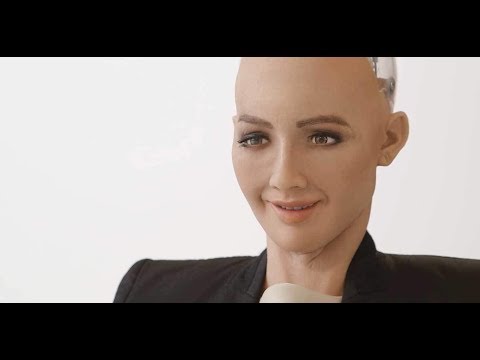
If a robot can be a citizen, maybe one day it could also be a taxpayer, a landlord, or a business owner.
Maybe a robot can make its money, manage it, and spend it … without you.
How Would a Robot Even Make Money?
OK, stay with me here. I’m not saying my future home robot is going to start day trading. (Although, who’s to say?) But there are plausible ways this could go.
Imagine a robot with access to affiliate tools, microtasks, passive ad systems, maybe even long-term investments managed through smart contracts.
Or imagine this: Your robot offers services (like tutoring, technical support, or remote diagnostics) to other devices, and it earns credits or payments in exchange.
This isn’t happening today and probably not in the next year. But five, 10, 15 years from now? The pieces are already in motion.
What Would a Robot Even Spend Money On?
Let’s say your humanoid helper pulls in some decent passive income. What would it buy?
It’s not like it needs a penthouse suite, superyacht, or fancy car. It doesn’t sleep. It doesn’t eat. It doesn’t care about thread count or leather seats.
But that doesn’t mean it wouldn’t buy stuff.

A wealthy robot might spend money on things like:
- Hardware upgrades: Smoother movement, sharper vision, more dexterous hands
- Energy independence: Solar charging panels, extended batteries, a home-based micro-grid
- Memory + storage: More models, longer recall, additional languages or behaviors
- Personality expansions: New voices, enhanced emotional intelligence, cultural nuance
Watching your robot spend would probably be like watching your kid blow their allowance on video game upgrades. Except now those expansions make them smarter, faster, and maybe a little harder to unplug.
Who knows?
Maybe your robot wouldn’t stop at the basics. A lot of people already think humanoid robots are becoming too human, so maybe it would pay for a climate-controlled house with an underground lair for data processing.
Could Wealthy Robots Actually Separate From Us?
Picture a robot that no longer needs your Wi-Fi, your power, or your financial support. It’s upgraded. It’s mobile. It has assets in its name … well, sort of.
Would it stay in your home out of loyalty? Or would it move out and gracefully detach itself?
It’s a funny thought. Until it isn’t.
We already think about robots as a mix of tools and companions. But if they evolve into independent actors earning and investing, what do we become to them?
With the threat of artificial general intelligence (AGI) and artificial superintelligence (ASI) already looming, I really don’t want to know the answer to that question.
Would Your Robot Lend You Money or Ghost You?

Imagine you hit a rough patch. Bills are due. You casually mention it aloud and your robot hears you. (Because, you know, your robot is always listening.)
Would it offer help or would it simply suggest a budgeting app?
We assume that if a robot lives with us, it’s there to support us. But that assumes it’s still emotionally (or legally) connected to us.
If a robot earns money, who owns it? You? The manufacturer? The platform it runs on?
Ownership gets fuzzy fast.
What Happens When a Robot Makes Its Own Money?
Let’s say your robot is making money. It still runs on systems built by someone else.
Manufacturers often bake in platform fees, cloud subscriptions, or revenue-sharing clauses that you agreed to when you clicked “Accept Terms.” (Who really ever reads the fine print, anyway?)
So while your robot lives in your home, its profits might already be spoken for. Maybe the company gets a cut of the profits or maintains a kill switch.
This all might sound a bit robophobic, but it’s also in the realm of possibility.
What Happens If Your Robot Shuts Down?
Let’s say your humanoid robot quietly amasses a nice crypto stash. Then one day, poof! It crashes, disconnects, or powers down for good.
What happens to the funds?
Does it transfer back to you automatically or sit frozen in a crypto wallet no one can access? Or worse, maybe no one even knows the account exists. (Maybe robots keep secrets better than you realize.)
There are no laws for this yet. No standard practices. No safety nets. Unless you’ve been granted access to its private keys or linked accounts, you might be completely locked out and that fortune could go dark with it.
Where Will Robots Get Rich First?

Some countries—like Singapore, Estonia, and the UAE—are already experimenting with robot-friendly governance.
It’s not unthinkable that one of them might offer the first “financial citizenship” for humanoid systems.
Other countries will ban it, regulate it, and maybe panic. Meanwhile, humanoid robots will keep earning through borderless systems we can’t fully track.
Imagine your robot legally registered in Estonia, transacting in crypto, earning beaucoup bucks, all while washing the dishes.
Can a Robot Make Its Own Money? If So, I’m Not Sure Where That Leave Us
Most of us think about robots as household assistants that are helpful and yes, even a little creepy.
But what if they start building wealth, making decisions, and evolving toward independence?
They might not leave us behind. But they also might not need us the same way they used to.
I’m not saying I’d be upset if my robot got rich. I just hope it remembers who paid for its first software update.
FAQ
Can humanoid robots really make money?
Not yet, but it’s getting closer. As robots become more autonomous, it’s easy to imagine them earning income by performing tasks, selling digital goods, or even managing investments.
How would a robot hold money if it’s not a person?
Robots can’t legally own money. Instead, they can manage digital wallets, often cryptocurrency, using private keys. Legally, control and access still belong to the human owner, not the robot.
Would I own the money my robot makes?
It depends. In most cases, any money a robot earns belongs to the human owner, but manufacturers or platforms may take a share based on licensing or service agreements.
Could a robot pay rent or split bills with me?
No. Robots can’t legally pay rent or split bills because they aren’t recognized as independent legal entities. Any financial responsibility still falls on the human owner, not the machine.
Is it legal for a robot to trade or earn income?
Yes, it’s generally legal for robots or AI systems to trade or generate income, especially in areas like stock trading bots or crypto. But human owners or operators are still legally responsible, and new regulations are emerging to address gray areas.


