
Summary: Being scared of robots is more common than you might think. From the uncanny way humanoids move to fears of losing control or trust, our reactions say as much about human nature as they do about technology. Here’s why so many people feel uneasy about these AI machines and what that fear might be trying to tell us.
Key Takeaways:
- Many people are scared of robots because they challenge our sense of control and identity
- Pop culture and real-world tech amplify the anxiety we have about AI
- A fear of robots isn’t necessarily a bad thing; it can help keep us alert and always asking questions
Update: April 6, 2026
I’ll admit it: when I saw that video of the super-realistic female humanoid robot Iron by Chinese company XPeng, I felt a little freaked out. I wasn’t the only one.
People are scared of robots for a few key reasons: they challenge our sense of control, raise questions about trust, and blur the line between human and machine.
But that reaction isn’t just about something feeling “off.” For a lot of people, it taps into something deeper that brings up questions about control, trust, and what happens as these machines become part of everyday life.
To get to the bottom of it (or at least scratch the surface), let’s explore four big reasons why so many people are scared of robots.
1. We’re Unsettled by Things That Look Human But Aren’t

Psychologists believe our discomfort with human-like robots comes from deep evolutionary wiring. Our brains are tuned to recognize faces, movements, and gestures that signal life.
But when something mimics those cues in an imperfect way, it throws us off balance. Like when a humanoid robot walks smoothly but is still a little stilted.
That uneasy feeling you get when something looks almost human, but not quite, has a name: the uncanny valley. And it might be one of the oldest and most powerful reasons people are scared of robots.
Some of today’s top humanoid robots like Ameca, Sophia, and Iron are engineered to feel familiar, yet they expose how fragile that familiarity really is.
Studies have found that people are more comfortable with robots that look clearly mechanical, like Atlas from Boston Dynamics, than those that try to pass as human.
Basically, we want robots to feel human enough to connect with, but not so human that they creep us out.
2. We’re Afraid of Losing Control

Beneath the surface-level creepy factor lies a deeper fear about what robots can do. When machines start making decisions, or doing human jobs, it forces us to question who’s really in charge.
Thanks to pop culture, that fear has been around for decades. The story is always the same: humans build robots to make life easier, and then those robots begin to outdo us or even replace us.
Yep, that’s pretty much the origin of the word “robot.”
But today, it’s no longer just science fiction. As automation spreads, most of us are worried about robots taking over jobs or eventually making people obsolete altogether.
Plus, you have big banks like Morgan Stanley predicting there’s going to be over a billion humanoid robots by 2050, which can trigger even more fear.
Each breakthrough pushes us closer to a future where we’re not the ones making the final call, and that’s unnerving.
3. We Don’t Trust What We Don’t Understand
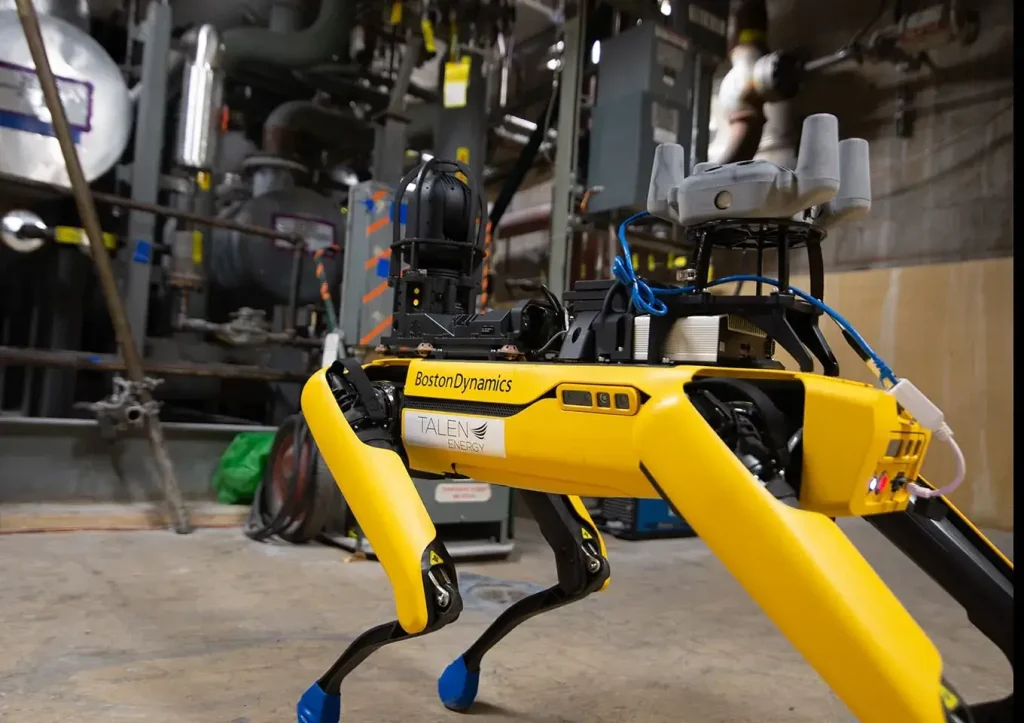
For most people, being scared of robots comes down to trust.
When a machine starts making choices, we want to know how and why. But the truth is, most of us have no idea what’s happening inside an algorithm’s “mind.” That’s what makes people uneasy.
When we see robots doing things that even humans can’t do and we’re not sure how it’s all happening, it feels unsettling.
Researchers call this the black box problem: AI systems that work in ways even their creators don’t fully understand. So when something feels hazy or unpredictable, our instincts tell us to keep our guard up.
Trust takes time to build and seconds to lose. For now, that’s one of the biggest obstacles between humans and robots.
4. Movies Taught Us to Be Scared

Long before robots showed up in real life, they were in books and on screens. Sometimes they’ve been our helpers, sometimes our enemies, and sometimes both.
Think of “The Terminator,” the calm-voiced HAL 9000 in “2001: A Space Odyssey,” the oddly human Ava in “Ex Machina,” the unforgettable Sonny in “I, Robot” and “M3GAN” in all her wacky-dance glory.
Sure, each of those stories entertained us. But they also conditioned us to distrust technology and stirred up feelings to not trust robots because it almost always ends up going too far.
So, Should We Be Scared of Robots?
As the line between science fiction and reality gets thinner every year, it seems perfectly reasonable to be scared of robots.
Fear, after all, can be a reminder to slow down, ask questions, and make sure the technology that’s being built still reflects the values we care about.
Some people’s fear goes deeper, bordering on what psychologists call robophobia. Others feel a mix of hesitation and hope that sits between fear and fascination. (That would be me.) You might even describe that as being robot curious.
The truth is, fear and fascination often travel together. Every new generation of machines, from steam engines to smartphones to humanoid robots, has sparked both wonder and anxiety.
Here’s hoping we learn to keep both in balance.
FAQ
Why am I afraid of robots?
Many people feel uneasy around robots because they mimic human traits in ways that can feel unnatural or unpredictable. That fear often stems from the uncanny valley, which is the sense that something looks almost human, but not exactly. It can also stem from broader worries about control and trust in technology.
What is the fear of robots called?
The fear of robots is sometimes referred to as robophobia, a specific form of anxiety triggered by human-like machines or artificial intelligence. While it’s not an official medical diagnosis, researchers use the term to describe discomfort or panic that occurs when people interact with robots or advanced AI.
Should we be scared of robots?
Not necessarily, but it’s understandable if you are. Fear can be a healthy response when technology changes faster than we can process it. Learning to understand how robots work and where they fit into daily life can turn fear into awareness, and awareness into confidence.
In Summary: Why People Are Scared of Robots
Being scared of robots is part of what makes us human.
Some of that fear comes from immediate reactions, like when something looks or moves in a way that feels just slightly off. But a lot of it runs deeper, tied to questions about control, trust, and what role these machines will play in our lives.
If you’re noticing that uneasy, almost instinctive reaction, it’s not just you. There’s a reason some robots feel creepy in the first place — and it’s only one piece of the bigger picture.
That’s why it’s important to pay attention to what unsettles us so we can push for a future where technology still serves people, not the other way around.


