
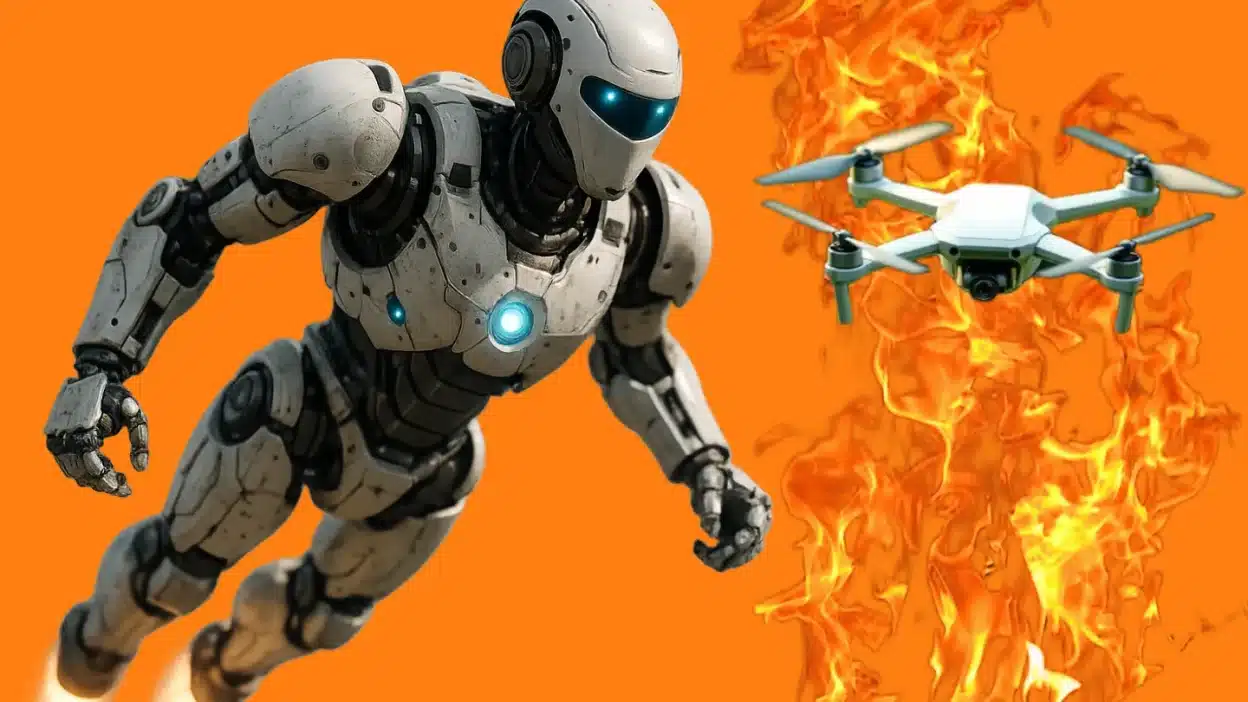
Summary: Today’s flying robots are no longer just drones or UAVs (unmanned aerial vehicles). They can fight fires and help with rescues, but they could also be weaponized.
Key Takeaways:
- As flying robots become more common, there are pros and cons to consider
- Flying robots can fight fires, rescue people, and maybe even help clean up the planet
- Airborne robots could also just as easily spy on you, cause chaos in the skies, or be used as weapons
Flying robots are here. And they’re about to be everywhere.
No, I’m not just talking about drones that light up the sky with synchronized shows or deliver Chipotle for a publicity stunt. (Remember the Google Wing drone that air-dropped burritos back in 2016?)
I’m talking about autonomous flying robots that can help out in disasters, patrol the skies, or maybe even protect the planet. These unmanned aerial vehicles (UAVs) could also wreak havoc in ways we’re only beginning to imagine.
So, should we be excited or worried about flying robots?
In true Robots Good or Bad fashion, we’re looking at both sides to help you decide for yourself.
✅ They Could Save Lives From the Sky
Let’s start with what flying robots might do best: help out when humans can’t.
To fight fires, Canada’s FireSwarm Solutions is developing autonomous, ultra-heavy-lift swarms, each capable of hauling up to 771 pounds of extinguishing material.
These rugged flying robots work through heavy smoke and at night, when manned aircraft usually can’t. Imagine hundreds of them autonomously creating a rain-like plume to smother a wildfire.
Flying robots are also starting to help with search and rescue after natural disasters.
Some are already being trained to drop emergency kits—water, first aid, maybe even a satellite phone—to people who can’t wait for responders to reach them.
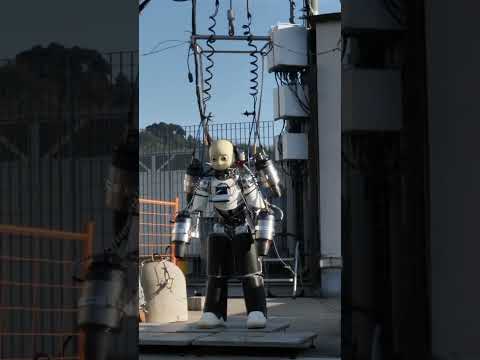
The latest breakthrough is Italy’s iRonCub3, a jet-powered humanoid that just completed a 20-second hover about 1.6 feet off the ground.
It’s not ready for showtime yet, but researchers hope its unique design could one day help in disaster zones, rescue missions, and toxic environments.
❌ They Might Spy on You From Above
Law enforcement and militaries are already using mini surveillance drones like the Black Hornet Nano, a palm-sized robot designed to fly silently into dangerous or sensitive areas. Meanwhile, consumer-grade models are already peeking over fences, hovering near windows, and capturing footage without consent.
As these machines get smaller, smarter, and more autonomous, surveillance becomes harder to spot, and harder to stop.
Imagine a robot small enough to slip through a cracked window and quietly sit in the corner. With thermal imaging, directional microphones, and AI-enhanced recognition, it wouldn’t take much for someone to turn that tech into a tool for stalking, blackmail, or corporate espionage.
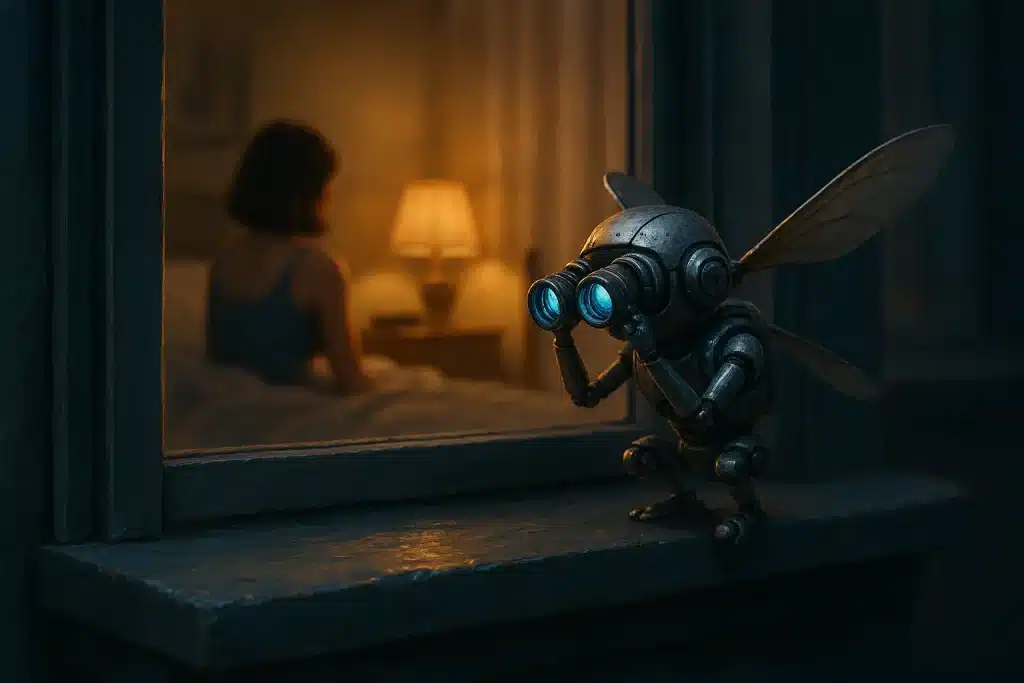
This new startup SWARM Biotatics just got on our radar! Based in Germany, they’re pioneering “bio-robotic swarms” by combining real insects with sensors, AI and secure communications to go where traditional machines simply can’t. Did you catch that part? They are using REAL INSECTS outfitted with electronics (backpacks with sensors, communication modules, neural stimulation) as part of their system. Now that is crazy cool and also a bit scary.

The truth is, people are already inviting surveillance into their homes. Amazon’s by-invitation-only Ring Always Home Cam is a $249 indoor camera drone designed to fly preset paths around your house while you’re away.
Even though this flying robot still isn’t available (the company keeps pushing the release date), it’s being marketed as a security tool to check for intruders … or whether you left the stove on.
But it doesn’t take much imagination to see how that could go bad. As a 2021 New York Times article pointedly asked when the device was first announced, what could go wrong?
✅ They Could Help Clean Up the Planet
What if flying robots could actually help fix the atmosphere?
Right now, high-altitude robots are being used to monitor greenhouse gases and track changes in climate patterns. But future swarms could go beyond observation to disperse pollution-fighting particles, cool down hotspots in cities, or even repair ozone damage with targeted materials.
Powered by solar energy, some could stay airborne for months at a time, flying programmed routes to encourage rainfall during droughts or reduce urban heat zones.
Weather control is still controversial—cloud seeding has been around for decades—but if robots can do the job better, safer, and longer than humans ever could, maybe it’s only a matter of time before they’re part of the solution.
❌ They Might Be Turned Into Personal Weapons
Picture a guy living in his mom’s basement. Maybe he was made fun of in high school and now wants revenge. He’s directing a swarm of pocket-sized flying robots from his hidden lair. It’s like “Oliver Twist,” but this time, criminal mastermind Fagin has the help of AI.
It sounds far-fetched until it’s not.

With AI coordination, these kinds of machines could carry out a targeted mission, vanish, and leave almost no trace. They wouldn’t need much oversight. Just a set of objectives and a bit of training data.
At first, personal swarms might be marketed as the next wave of home security. But give that capability to the wrong person, and the system becomes a weapon.
It’s easy to imagine how one bad day—getting fired, a breakup, a grudge—could turn a defensive tool into an offensive one. Once prices drop, swarms won’t just belong to governments or corporations. They’ll belong to individuals.
So do we treat these like firearms, drones, alarm systems? Maybe they’ll become a completely new category of privately owned airborne weapons.
✅ They Could Be Our Last Defense Against Planetary Doom
Could flying robots save Earth?
NASA already landed a helicopter on Mars (shoutout to Ingenuity), but that was just the beginning. Now imagine a swarm of flying robots in space, working together to intercept asteroids, monitor solar flares, or … stop an alien invasion.
They could gather early warning data, guide impactors, deploy micro-thrusters to alter a rock’s course, or even self-sacrifice to shield the planet. It’s “Deep Impact” but instead of astronauts digging a hole, imagine autonomous robots coordinating mid-space maneuvers.

These orbital robots could also clean up space junk or patch up satellites. Maybe they’ll help expand the ISS—or even build a separate, fully robotic space station.
In any case, if something big, heavy, and possibly fiery comes hurling toward Earth, who do you think is more likely to reach it in time—us, or the robots?
❌ They Might Make the Skies More Dangerous
Speaking of things hurtling through the air … we’ve all seen what a flock of geese can do to a jet engine. Now imagine a swarm of flying robots drifting into a busy flight path.
Unlike trained pilots or air traffic controllers, the average private robot owner probably won’t follow regulations. People will take risks, hack the robots when they can, and fly them wherever they please.
It’s not hard to imagine a near-miss (or a direct hit) between a passenger plane and someone’s rogue delivery robot.
In 2017, a drone struck a commercial aircraft during its descent into Quebec City, the first confirmed collision of its kind in North America. Thankfully, no one was hurt. But what happens when it’s not just one drone, but hundreds?
Flying robots can also collide with each other. And when they do, debris will fall. Fast.
If something plummets from 30,000 feet and lands on your house, your car, or your head … well, that’s not exactly a minor inconvenience.
The more crowded our skies become, the more likely it is that something goes wrong.
So What Happens When the Sky Belongs to Robots?
Flying robots might do some good: assisting in emergencies, providing security, and helping the environment. But they might also spy on you, crash into your house, or worse.
One thing’s for sure: the world is changing, and so are the skies. So if you hear a faint buzzing overhead, don’t assume it’s a bee or a fly.
It might be a little machine watching you.


