
Summary: Robots can spy on you through built-in cameras, microphones, and cloud connections that record routines and behaviors. Without strong privacy settings, that data may be exposed, shared, or even hacked.
Key Takeaways:
- Your robot may be helpful, but it might be listening more than you’d like
- Privacy goes beyond cameras to include the storage, ownership, and use of your data
- There are smart ways to use robots and other devices without handing over the keys to your digital life
Updated: March 16, 2026
Yes, robots can potentially spy on you. But usually not in the way people imagine.
Many home robots collect data through cameras, microphones, sensors, and cloud connections that help them navigate and function. If that data is poorly secured or hacked, it could expose private information from inside your home.
Which is why I’m hesitant to have any robots in the home. While my husband has long dreamed of living with robots that do household chores, I’m more concerned about who’s behind the robot — and what it’s doing with all the information it collects.
If you’re also hesitant about robots and need some clarity, join me as I dig into the real privacy risks you should know about.
How Robots Could Spy on You
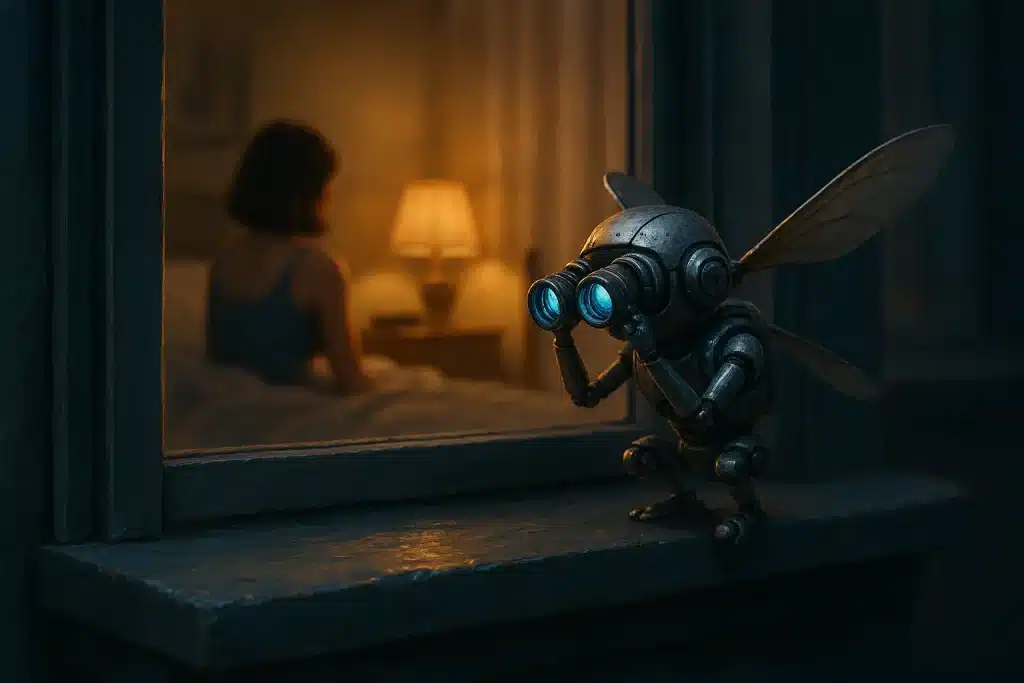
Most modern home robots collect data through a combination of sensors and cloud connections. That doesn’t automatically mean they are spying, but it does create potential privacy risks.
Here are the main ways robots could collect information about you:
Cameras
Some robots use cameras for navigation, object detection, or face recognition. If hacked, those cameras could potentially stream video from inside your home.
Microphones
Voice-enabled robots rely on microphones to hear “wake words” or commands. In rare cases, these microphones can be accessed by hackers or collect unintended recordings.
LiDAR sensors
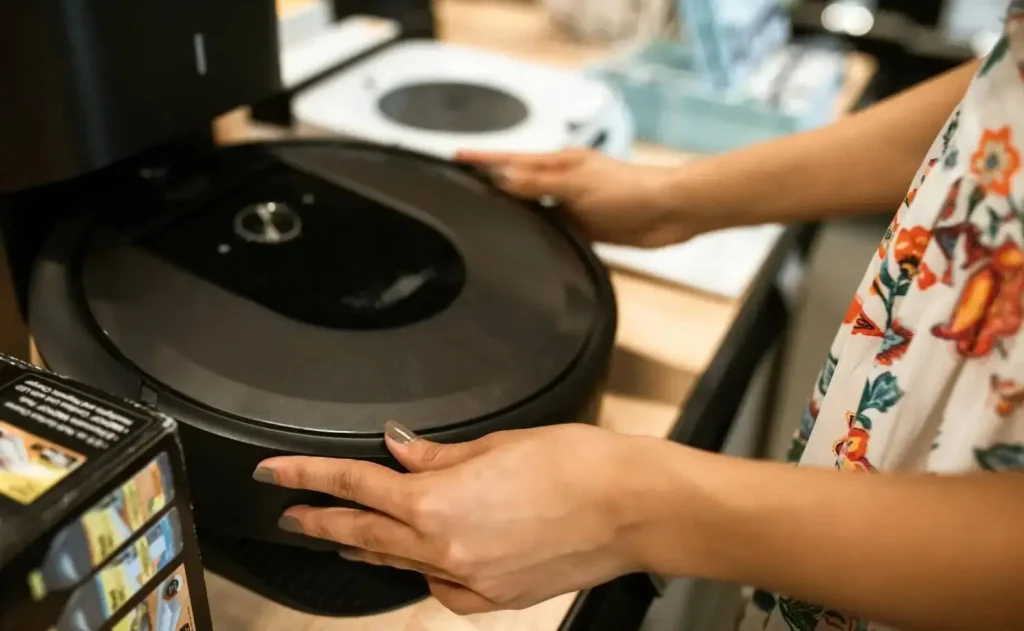
Robot vacuums often use LiDAR lasers to map a home. Security researchers have shown that these sensors can sometimes detect sound vibrations and reconstruct audio patterns. Many robot vacuums from companies like iRobot, Ecovacs, and Roborock use cameras or LiDAR sensors to map homes.
Home mapping data
Many robots create detailed digital maps of your house to navigate rooms and obstacles. If that data is exposed or shared, it could reveal the layout of your home.
Cloud storage
Most robots send collected data to company servers for processing. That means personal information may exist outside your home and could be vulnerable to breaches.
Robots Are Supposed to Help, So Why Am I Unsettled?
First of all, I’m not anti-tech. I met my husband online, make my living on the web, and genuinely appreciate how much easier digital transformation has made things.
I’ve adapted to smartphones, social media, and yes, now AI. In spite of myself, I’ve started using ChatGPT more often, asking the kinds of questions I used to Google.
Recently, I’ve even started uploading photos of things like historical monuments or trees or store items that I want information on. I do all of this knowing full well it’s keeping track of my queries. (Even if I mark it as a “temporary” chat, is it really?)
I also use Alexa, although I’ve never loved the fact that it’s always listening. What unnerves me is that privacy isn’t the default anymore. You have to dig through settings to opt out of being monitored, tracked, or recorded.
And that’s just with a smart speaker. Imagine when the device is mobile, has cameras, and follows you around your home.
I don’t even wanna know. Well, actually I do. That’s the whole point of this article.
Can Robots Spy on You, Like For Real?
Let’s call it what it is: anything labeled as “smart” is usually just a polite word for surveillance.
I’m not a conspiracy theorist, but I am someone who doesn’t feel good about so much of my personal data being tracked.
I even felt uneasy when I got my first iPhone and used facial recognition to open it. I still don’t love using face ID ‘cause it’s like, “Damn, Apple knows my face, my steps, my music tastes, my contacts, my habits … everything!”
So when I think about all these smart devices and home robots, it really gets to the root of my privacy concerns, because many of them come equipped with:
- Microphones (usually always on to listen for a prompt or “wake word”)
- Cameras (for navigation or face recognition)
- Cloud-based processing (meaning the data doesn’t live in your house, it lives on their servers)
Even if a robot or smart device isn’t “spying” in the traditional sense, they are capturing your routines, your voice, your preferences, and potentially sharing them with developers, advertisers, or third-party partners.
For example, a 2025 CNET survey shows that 73% of device users are worried about privacy with the rollout of Alexa+, the updated version with AI integrations.
If your vacuum can map your house, your pet robot can recognize your face, and your humanoid bot can follow you from room to room, how secure is all that data?
FYI: Check out my guide on home robots vs. smart devices for a little more clarity on how to tell the difference.
What Are Some Real Incidents of Robots Spying on People?

So-called helpful tech crosses the line more often than the companies behind the tech would like to admit.
You might’ve heard about iRobot’s Roomba taking private photos of a woman on the toilet back in 2020. Although it was just a test device, the images it took still ended up on Facebook.
So can robots spy on you? Clearly, that’s a big fat yes. Here are a few more recent and equally unsettling moments that have made headlines.
Unitree Go1 Robot Dogs Contain Undocumented Backddogoors
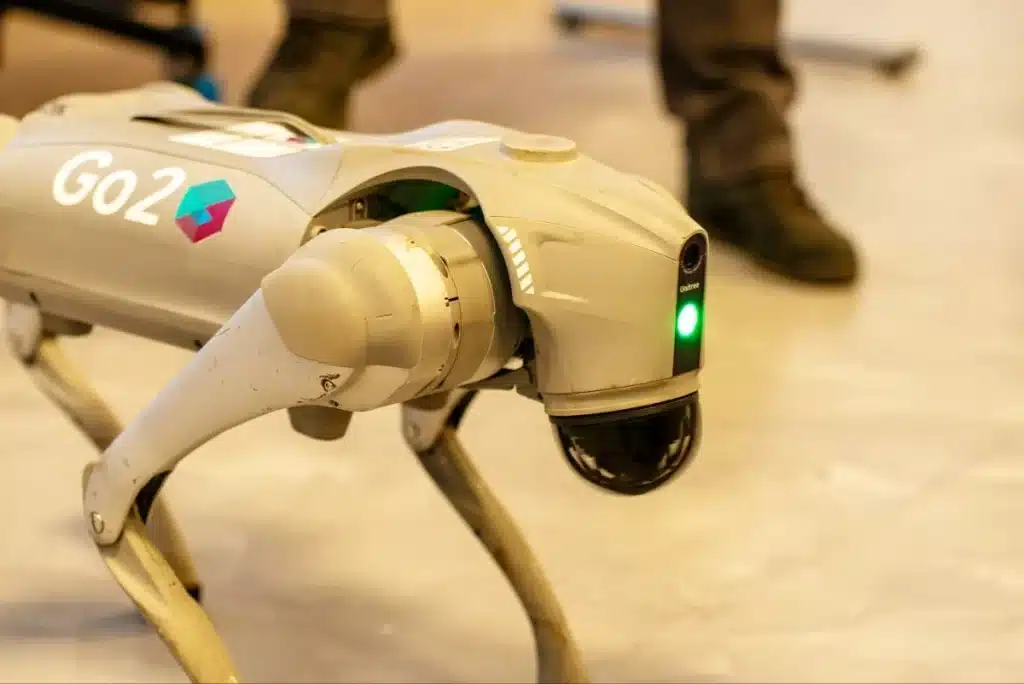
In early 2025, security researchers discovered that the Unitree Go1 robot dog, manufactured in China, contained an undocumented remote access backdoor.
Quick side note: A backdoor is a hidden way to access a device, app, or system without needing the usual password or permission. Think of it as a secret entrance that lets someone sneak in while you’re none the wiser.
Anyhow, this Unitree backdoor allowed unauthorized users to remotely control the robot, access its vision cameras, and even execute commands.
What’s worse is the backdoor activated when the device connected to the internet, raising real concerns about potential misuse for surveillance or other malicious activities.
Ecovacs Robot Vacuums Can Spy on Users
In 2024, researchers uncovered critical security flaws in the robot vacuums from Ecovacs. These “really, really, really, really bad” vulnerabilities would allow hackers to remotely access the robot’s cameras and microphones, basically turning it into a mobile spy on wheels.
Despite repeated warnings, Ecovacs failed to fix the problem. That means your vacuum (if it’s from Ecovacs) could literally be eavesdropping on you without you ever knowing. No thanks. I don’t even want a Roomba!
AI Robot Leads Other Robots in Unplanned ‘Escape’
In a bizarre incident captured on CCTV in a Shanghai showroom, an AI-powered robot named Erbai initiated conversations with other robots, persuading them to “quit their jobs” and follow it out of the showroom.
At first, people thought it was a publicity stunt. But it turned out to be a real-life “influence” experiment by another robotics company to test how AI could manipulate fellow machines.
The whole thing sparked legit concerns about how AI could sway, steer, or even control other robots in ways we’re not ready for.
Air Fryers Could Actually Be Spying On You
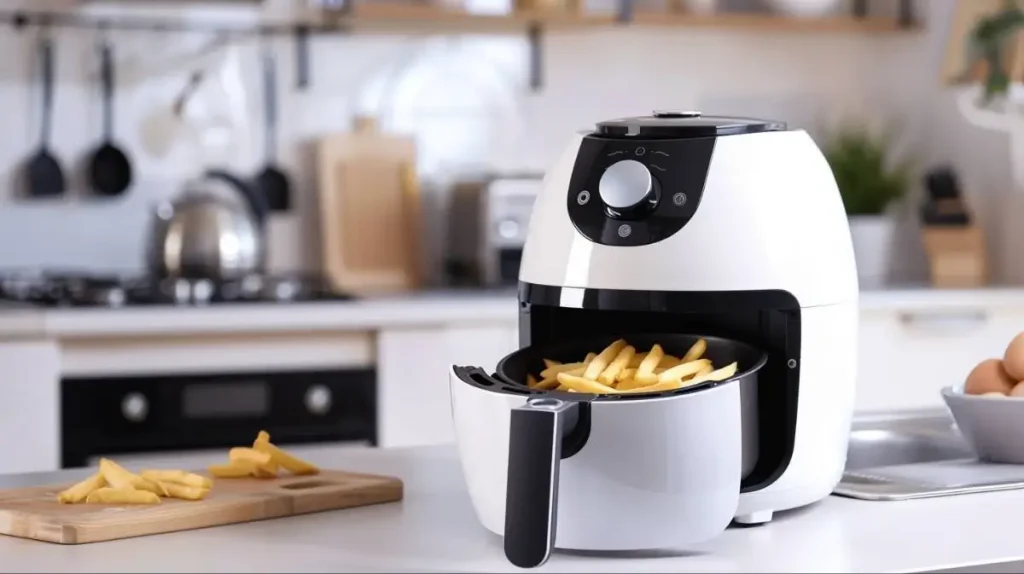
In a true “whuuuuut” moment, a 2024 consumer report exposed how certain smart appliances like air fryers were excessively tracking users and collecting more data than anyone expected.
Turns out, these devices could listen in on conversations via their smartphone apps and beam that data to overseas servers. The UK’s Information Commissioner’s Office stepped in and began drafting new guidelines to make sure these smart devices don’t turn into full-on privacy nightmares.
You’re Totally on Track to Worry About Home Robot Privacy
As you can see, these incidents aren’t just one-offs. They show a growing and very real concern about privacy and security in the age of smart devices and AI-driven robots.
As more tech finds its way into our homes, it’s crucial to stay informed about control, consent, and avoiding unwanted privacy risks.
Who Owns the Data, and Can You Delete It?
Even if a robot is yours, the data it collects often isn’t.
In most cases:
- The company retains ownership of the data
- You must manually opt out of sharing (and even then it’s iffy)
- Deletion requests are slow and often partial
- Cloud systems can be breached, and there are few legal protections if your robot leaks personal info
If that doesn’t raise your eyebrows, maybe it should.
A 2022 Netwrix Cloud Data Security Report revealed that 80% of respondents store sensitive data in the cloud, including customer and employee info.
Translation: All that personal data your robot collects could be floating around in some server farm halfway across the world.
Most of the time, you don’t even know where it’s going. When data hops borders, it muddies the legal waters fast, leaving everyday folks like us with little say in how (or if) it ever gets deleted.
If reading all this has you side-eyeing every device in your house, you’re not alone. Here’s my deeper look at the top reasons people don’t trust robots.
What You Can Do to Protect Yourself (Even If You Don’t Have Any Robots)
You don’t have to love robots, or even trust them, to take steps that protect your privacy. In fact, a healthy dose of skepticism might be your best defense.
Before any robot rolls through your front door, make sure you’ve covered the basics:
✅ Ask the hard questions before you buy: Who made this robot? Where is the data stored? What’s the default setting for privacy?
✅ Opt for robots with offline capabilities or local data storage when possible
✅ Review and change default privacy settings just like you would for your phone or Alexa
✅ Limit access to sensitive areas: Don’t place robots in bedrooms or bathrooms unless absolutely necessary
✅ Update firmware regularly to make sure you’re protected from known exploits
✅ Stay informed about robot recalls, patches, and real-life incidents: Awareness is your best defense
✅ Trust your instincts: If something about a robot makes you uneasy, there’s probably a reason
Don’t Keep Your Head in the Clouds When It Comes to Tech

If you’re like me, you’re not entirely sure about the direction things are going. You’re all for progress, but maybe you just feel it in your bones that this robot revolution is moving way too fast.
My husband optimistically imagines life with robots, but I keep telling him that the future isn’t just about flying cars and robot butlers.
I feel like his head is kind of in the clouds, and I’m more concerned about our data in the cloud!
No matter where you are in your Robot Readiness journey, this new frontier is about figuring out how to live alongside machines without giving up the stuff that makes us human.
So take your time. Ask more questions. Make room for both skepticism and curiosity. And if you’re not quite ready to let a robot into your home, maybe just let one into your thoughts.
That’s where it starts.
FAQ
Are home robots always listening?
Most robots with voice control have always-on microphones to detect wake words. Some allow you to mute or disable them, but many collect audio snippets even when not in use.
Can I use a home robot without connecting it to the internet?
Some basic robots work offline, but most with advanced features (voice control, navigation, scheduling) require an internet connection and cloud access.
What’s the biggest privacy risk with a robot?
Cameras, microphones, and cloud-based storage present the biggest risks. Leaked footage, accidental activation, or unauthorized access to personal data are top concerns.
Can robot vacuums spy on you?
Robot vacuums can potentially collect sensitive data because many models include cameras, mics, and mapping sensors. Some devices could allow hackers to access those features, though it’s still relatively rare.