
Summary: Robots may record conversations, habits, and emotions, often storing them in the cloud. Without clear privacy settings, they can’t reliably keep secrets from families, companies, or even courts.
Key Takeaways:
- Robots may record more than you expect, including your behavior, tone, and emotional patterns
- Robot privacy concerns extend to relationships, with new questions about loyalty, discretion, and family dynamics
- Smart privacy settings are essential, including mute buttons, user profiles, and data retention controls
Anyone who knows me well knows I’m psyched about robots. The kind that walk, talk, follow you around, and maybe even rub your feet if you ask nicely.
I’ve always been drawn to the ones that feel most human or most pet-like. You know, the kinds of robots you could imagine living with and even taking on a plane, not just using.
So yeah, I’m a Robot Enthusiast.
But lately, something unexpected has been happening. My wife Mar, who’s always been a bit more skeptical, has started asking some serious questions about robot safety.
Just like my enthusiasm has started to influence her, her caution has started to creep into my thinking.
It’s got me wondering: What will these robots really be like once they’re in our homes? Not just what they do, but what they know. What they see. What they remember. And who they tell.
I really want to know: Can robots keep secrets?
What Do Robots Record and Upload to the Cloud?
First, there’s the kind of robot privacy we’ve already started to sacrifice.
I already know my phone is listening, and so is my Alexa device. (Not just after I say the “wake word” either. She’s always listening.)
But a home robot takes it to another level. I imagine it won’t just record what I say. It’ll probably notice other things like how often I go into the kitchen, if my voice sounds anxious, or if I’m walking a little slower than usual.
All of this data could be uploaded to the cloud and stored indefinitely. I want to know what it’s being used for.
- Targeted marketing? Almost definitely.
- Training future AI models? Possibly.
- Being shared with third parties? Wouldn’t be surprised.
- Flagging risk behavior for robot insurers or employers? Most likely.
Basically, a personal robot could be feeding my data into systems that make judgments about my habits and health.
It sounds dramatic, but my wife’s piece on Can Robots Spy On You? shows just how close we already are.
Can Home Robots Keep Family Secrets?

Robots don’t keep secrets in the usual human sense because AI doesn’t have emotions.
Still, it’s kind of fun (and increasingly necessary) to ask questions about this kind of stuff.
Let’s say I decide to sneak a cigarette out back when I know damn well I shouldn’t. Do I need to worry that my robot’s going to bring it up later in some kind of cheerful health recap and casually mention it to my wife?
“Stress levels spiked last Thursday evening. Nicotine exposure detected.”
Wait, what?
If my robot sees something or hears something, can I ask it to keep it between us?
Will it understand what’s private? What’s sensitive? Or is it going to blurt something out at dinner without realizing it’s blowing up my spot?
For some people, this is exactly why they’re afraid of robots, even if they’ll eventually get one.
Will My Robot Be Loyal to Me or My Family?
Let’s say I ask my robot not to tell my wife something. Then my wife asks the robot what I’ve been up to.
Who does it listen to?
Are we both admins? Can I flag certain activities as “private”? Can she override me? Will the robot try to stay neutral, or will it side with whoever has better access credentials?
What if you have a kid who asks it a question it wasn’t supposed to answer?
What if the robot overhears something technically illegal like a casual admission, a half-joke, a real mistake?
- Does it report that?
- Can it be subpoenaed?
- Does it even understand nuance, or does it just flag and forward?
These are the kinds of ethical gray zones that keep people from getting a robot, even when they’re tempted. If that’s you, take a look at the 4 signs you might be ready for a robot before inviting one into your house. It’s basically a gut-check for trust, comfort, and expectations.
Right now, we don’t have clear models for this. There’s no social contract for “robot loyalty.” But once these machines are part of our daily lives, we’re going to need one. Fast.
Because if the robot is always watching and always remembering, then it needs to know when to speak up and when to shut up.
What Privacy Settings Should I Set for My Robot?
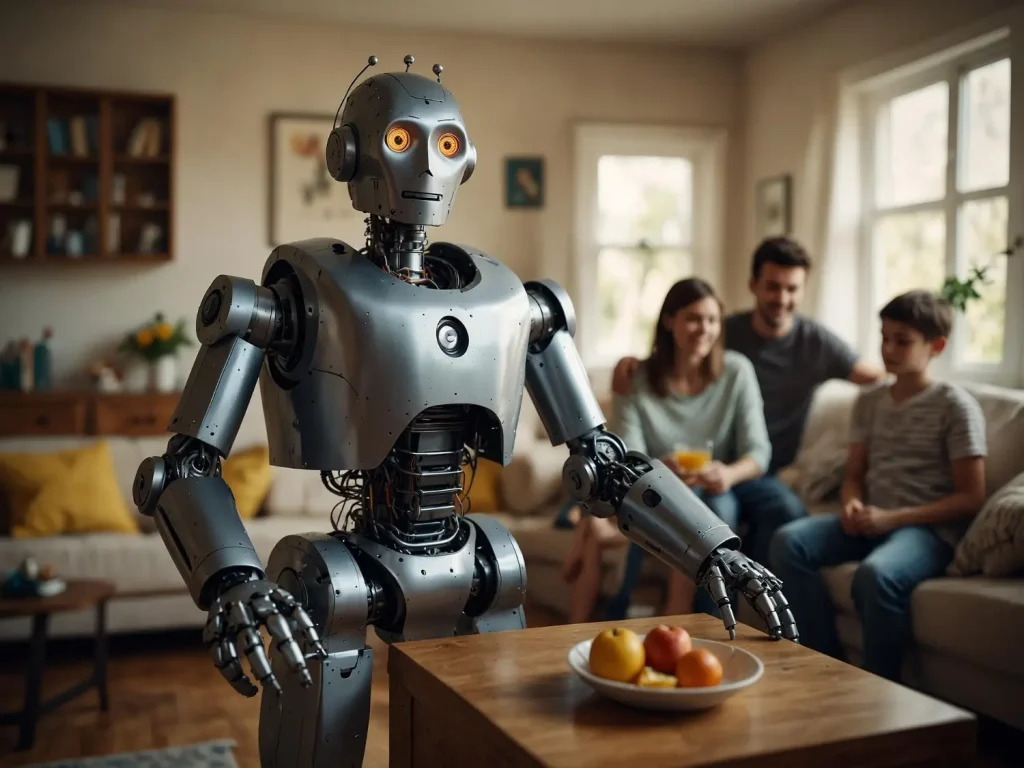
If I’m going to enjoy life with robots the way I hope to sooner than later, I’d like some control over what it remembers and what it shares.
Here’s my privacy wish list for home robots:
- Mute Buttons: Physical switches to disable microphones and cameras.
- Privacy Zones: Designated areas where the robot doesn’t record or enter.
- User Profiles: Separate settings for each household member, with customizable permissions.
- Data Logs: Transparent records of what’s been recorded, stored, or shared.
- Data Retention Controls: Options to delete or anonymize data after a set period.
- Emergency Protocols: Clear guidelines for when the robot should report something and when it shouldn’t.
Until these kinds of privacy controls become standard, I’m going to treat my robot like it’s always listening and assume it might talk even if I don’t want it to.
So, Can Robots Keep Secrets?
If we want these machines in our lives, we have to take that question seriously.
A robot that helps you should also protect you. If it doesn’t know how to keep a secret, it doesn’t belong in your home.
If you’re wondering whether this is “healthy skepticism” or “OK, I’m out,” here’s what Robot Readiness means.
FAQ
Can I trust my robot not to share my data with third parties?
It depends on the manufacturer’s privacy policy. Some companies allow data sharing for customer benefits, but it’s essential to read the fine print.
Will my robot always be recording?
Many robots have default settings to collect data continuously. However, some offer options to mute microphones or limit tracking within defined zones.
What happens if my robot overhears something illegal?
Right now, most home robots don’t have legal obligations to report. But as laws evolve, that could change, especially if cloud storage is involved.


