Summary: The first programmable industrial robot was invented by George Devol, who patented the Unimate robotic arm in 1954. Later commercialized with Joseph Engelberger, Unimate launched the modern robotics industry and reshaped how factories operate and how we live today.
Key Takeaways:
- George Devol invented the first programmable industrial robot, the Unimate, in the 1950s
- His invention helped turn robotics into a real, working industry
- Unimate laid the groundwork for today’s robots that act in the physical world
Updated: January 23, 2026
When people ask “who invented robots,” they’re rarely looking for trivia. They’re trying to pinpoint when machines stopped being simple tools and started acting like workers.
That turning point begins with one inventor, and one machine: George Devol and his Unimate.
Before robots talked, blinked, or danced on TikTok, he imagined a mechanical arm that could move almost like a human’s.
In the 1950s when most people were just getting their first televisions, Devol was teaching machines how to follow instructions and repeat every step. That idea became Unimate, the world’s first industrial robot, and the ancestor of nearly every automated arm on an assembly line today.
If you’ve ever watched a robot weld, stack, or build something with extraordinary precision, you’re seeing the legacy of one inventor’s belief that machines could do work we once did ourselves.
Who Invented Robots First?
If we’re talking about real, working robots, the credit goes to George Devol, an American inventor from Louisville, Kentucky, with a background in industrial machinery and magnetic recording.
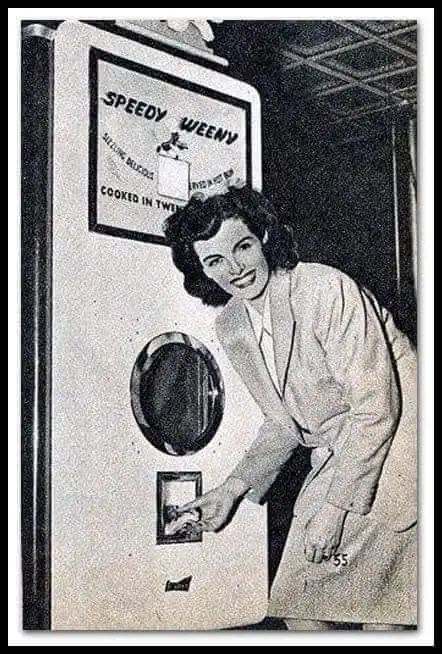
Long before he became the man who invented robots, he tinkered with other ideas, including the “Speedy Weeny,” a vending machine that sold hot dogs cooked in a microwave.
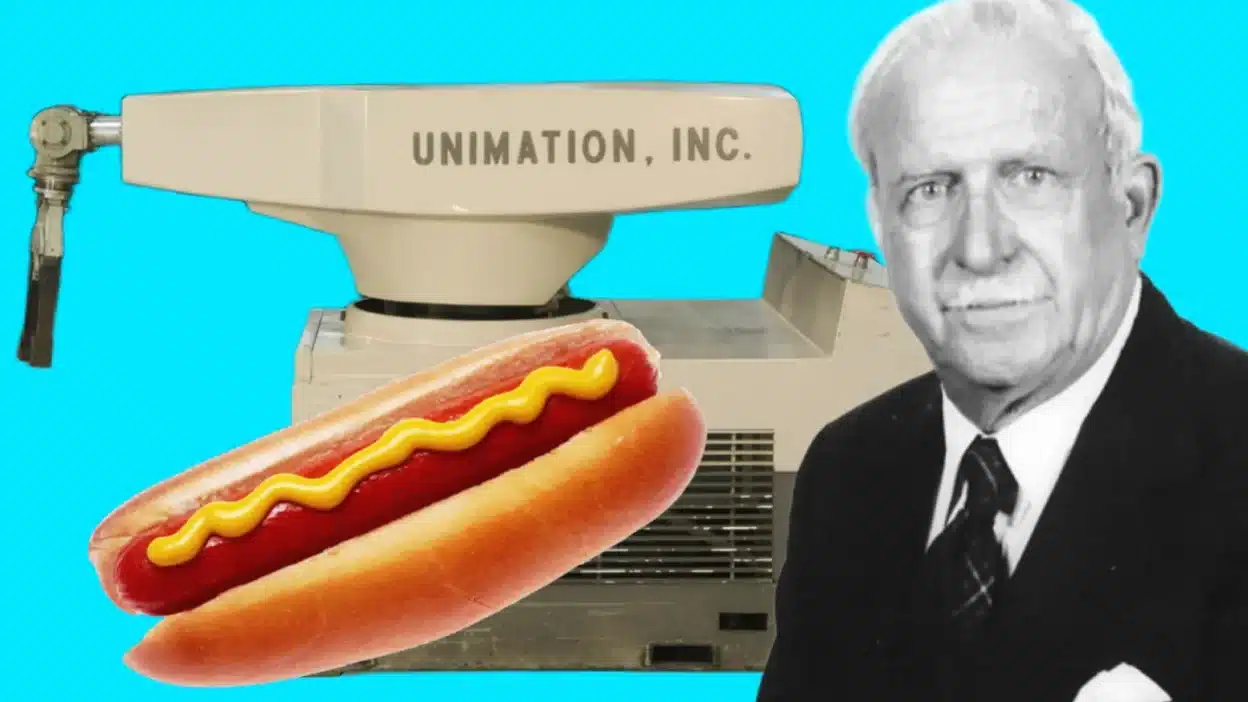
In 1954, he filed U.S. Patent No. 2,988,237 for a “Programmed Article Transfer Device.” That mouthful would soon be known as Unimate (short for “Universal Automation”), the world’s first programmable robotic arm.
Devol’s design was groundbreaking: it could move with six degrees of freedom and follow digitally stored step-by-step commands. That was a big leap from simple mechanical automation. (Finger dexterity and grip control are still major design challenges in humanoid robotics today.)
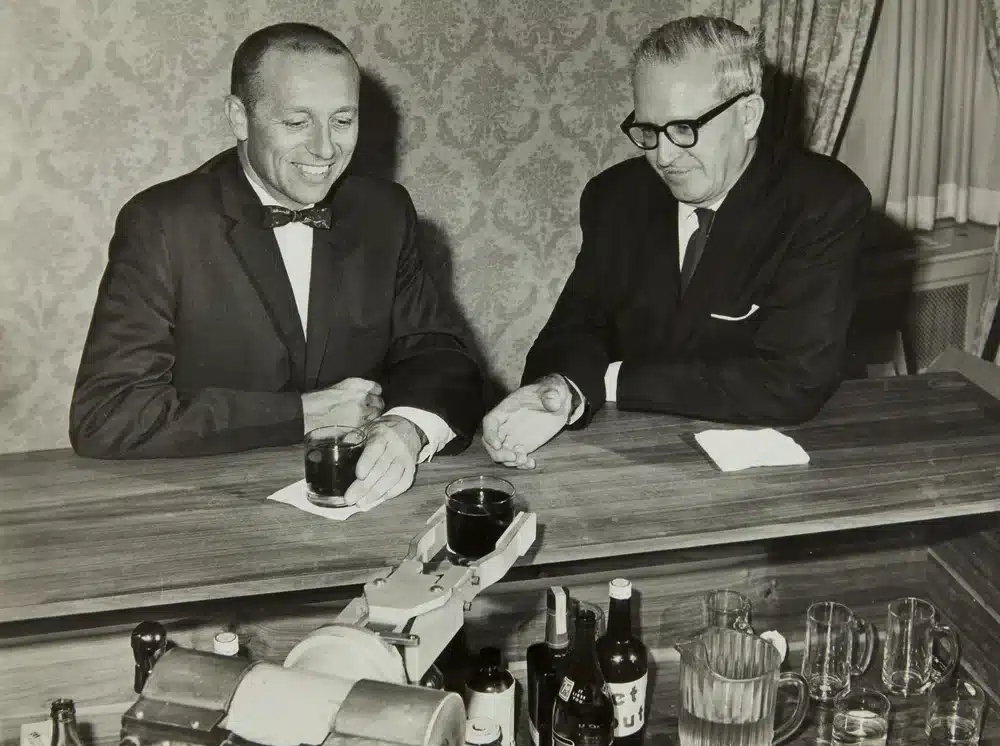
For about a decade, Devol struggled to sell or scale Unimate on his own. It wasn’t until he met Joseph Engelberger in the mid-1950s that things changed. Engelberger licensed Devol’s patent and co-founded Unimation, Inc. in 1956 to develop and market robotic arms.
In 1961, a General Motors plant in New Jersey became the first to use Unimate on an assembly line. Its job was to pick up hot die-cast metal pieces and stack them since that was too dangerous for human workers.
Little did they know it was the birth of industrial robotics.
Who Invented the Concept of Robots?
While George Devol built the first working, programmable robot, the idea of robots came earlier, and the answer depends on what we mean by “robot.” The word “robot” dates back to 1920, when Czech writer Karel Čapek used it in his play “R.U.R. (Rossum’s Universal Robots).”
Čapek’s “robots” weren’t machines in the modern sense. They were artificial humans created to work, serve, and obey … until they didn’t. That story cemented a pattern that still shapes how we think about robots today: as laborers first, helpers second, and potential threats if control breaks down.
In the decades that followed, science fiction became fertile ground for robot responsibility. Sci-fi writer and biochemistry professor Isaac Asimov formalized these anxieties in his famous Laws of Robotics, which still influence how engineers, policymakers, and filmmakers talk about intelligent machines. (Ever see the movie “I Robot”? It draws ideas directly from Asimov’s laws.)
But before anyone could debate robot morality, someone had to build a machine that could actually remember instructions, repeat them, and work in the real world.
That leap from concept to capability is where George Devol entered the story.
Who Are the Famous Inventors of Robots?
The evolution of robotics wasn’t driven by a single person, but by a small group of thinkers and builders who shaped how robots are designed and understood:
- George Devol – Inventor of Unimate (1954), laying the foundation for modern automation
- Joseph Engelberger – Engineer who partnered with Devol (1956) to bring industrial robots into factories worldwide
- Leonardo da Vinci – Iconic artist and renaissance man who designed a mechanical knight around 1495, centuries before electricity existed
- Nikola Tesla – Famed inventor who experimented with remote-controlled boats in the 1890s, which were essentially early teleoperated robots
- Isaac Asimov – Visionary writer (1940s-90s) who gave structure to how we talk about robots, ethics, and fear
Together, these men shaped the cultural and technological DNA that connects assembly-line arms to today’s humanoid robots like Ameca, Optimus, and Sophia.
How Did the First Industrial Robot Change the World?
Unimate moved the entire manufacturing world forward. All of a sudden, repetitive, dangerous, or heavy tasks could be automated.
By the 1970s and 80s, Unimation’s robots were welding car frames, assembling electronics, and reshaping production lines around the world. Factories became faster, safer, and more consistent, setting the stage for today’s automation boom.
In 2011, the year Devol passed away, he was inducted into the National Inventors Hall of Fame for creating the foundation of robotics as an industry.
The original Unimate now lives in the Smithsonian Institution, a fitting home for a machine that redefined human work.
Why George Devol Matters Even More Now
George Devol’s Unimate didn’t just automate a factory task; it introduced the idea (and reality) that a machine could remember instructions, repeat them consistently, and work alongside humans.
That breakthrough still defines what makes robots useful. The technology has evolved dramatically since Devol’s time, but the core challenge he solved hasn’t.
What Came After Unimate?
A wave of robot innovation came after Unimate’s industrial roots.
The 1980s and 90s saw the rise of programmable manufacturing arms from companies like Fanuc and ABB. In the 2000s, robots moved from factories into homes, hospitals, and other testing areas.
Today, that industrial foundation has expanded into what’s known as physical AI and embodied AI: machines that can perceive their surroundings, move independently, and respond to the world in real time.
George Devol: The Man Who Invented Robots Changed Our Lives Forever
George Devol couldn’t have imagined today’s humanoid robots, self-driving cars, or AI assistants in our pockets. But he set the stage for all of them when he taught a machine to remember and repeat.
Seventy years later, that same goal to make work easier, safer, or faster still drives the industry.
The difference is that now, the robots are learning back. Whether that’s good or bad depends less on them, and more on what we decide to teach them next.
FAQ
Who was the first to make a robot?
The first autonomous robots with complex behavior were built by William Grey Walter in England in the late 1940s. His small, turtle-shaped machines could sense light and navigate around obstacles. A few years later, George Devol invented the first digitally programmable robot, the Unimate, which became the start of robotics as an industry.
Who created AI?
The field of artificial intelligence emerged in the 1950s, led by researchers like John McCarthy, Marvin Minsky, and Alan Turing, who laid its theoretical groundwork.
Who owns AI?
No one “owns” AI entirely. It’s developed by countless companies, universities, and researchers. However, the tools and models (like ChatGPT or Gemini) are owned by the organizations that create them.


