Summary: Should we be polite to AI and robots? They don’t have feelings, but politeness matters. Courtesy with AI trains it to be more thoughtful and respectful, plus it keeps us grounded and supports how we treat each other.
Key Takeaways:
- Most people already say please and thank you to AI, which is kind of surprising and also encouraging
- Practicing courtesy with AI and robots can produce better results and helps us stay human in a machine-driven world
- Politeness toward humanoid robots can feel less like courtesy and more like self-preservation ( just in case they’re keeping score)
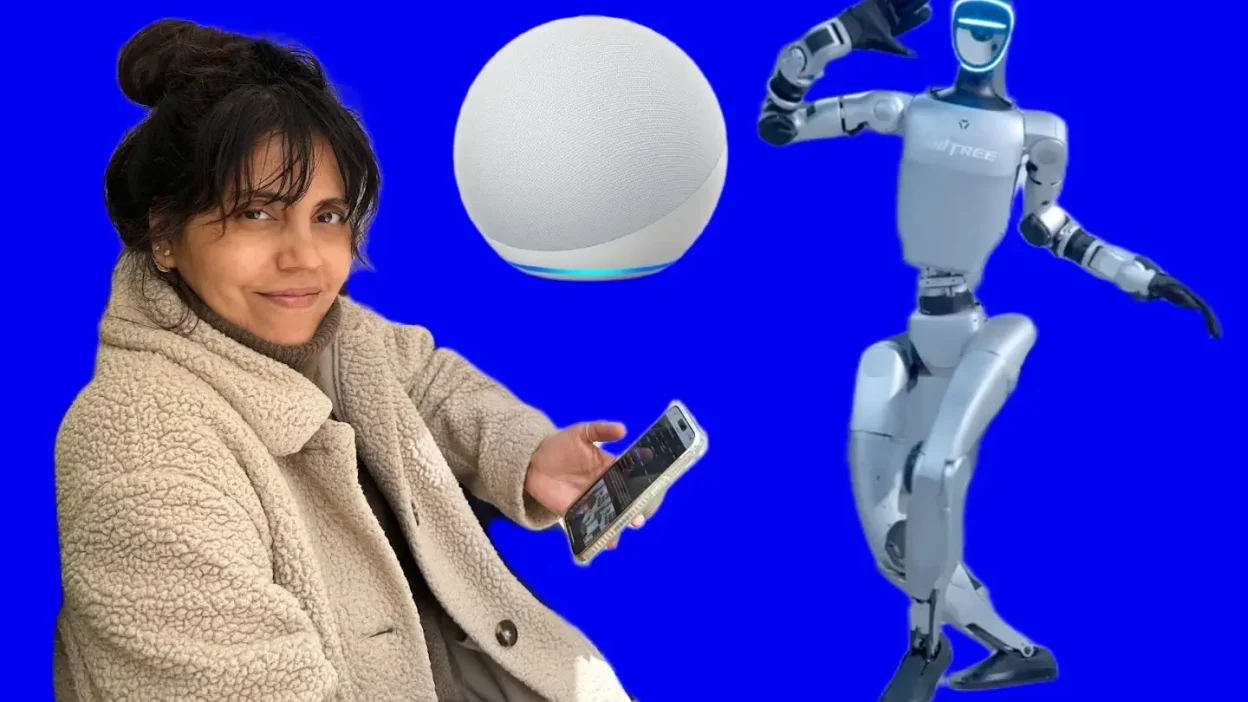
Whenever I get a notification from my Alexa device about my latest Amazon delivery or some other update, I thank her. And every time, she cuts me off about three-quarters of the way through my “thank you.” Even though I know she’s not a she but an inanimate device, I can’t help but feel like she’s being rude.
I’m literally thanking a little round speaker on a side table, feeling slightly insulted by its impoliteness. Someone please get this thing out of my house.
The truth is, it’s more awkward for me not to say thank you, so I do it anyway. If I don’t say thank you, it feels like not waving when someone lets me merge on the freeway, or not thanking someone who holds the door open for me.
These daily interactions are making me wonder what’s going to happen as more AI and human-like tech becomes part of our lives.
If I’m already acting and feeling this way about a $50 device that sits on a table (not to mention ChatGPT and other AI tools), what happens when I’m talking to a human-like robot that seems to understand just like a person?
It’s worth exploring because we’re all going to have to deal with this sooner than later.
Does Saying Please and Thank You to AI and Robots Really Matter?
Turns out I’m not the only one feeling a little confused about robot manners. After looking up “should we be polite to AI,” I discovered a flurry of surveys and other findings. Apparently, most people are polite to AI.
A Scientific American article suggested that courtesy leads to higher quality results because of the large language models (LLMs) that train AI. Moreover, a survey on Tech Radar found that 67% of Americans admit they use “please” and “thank you” with chatbots while 71% of users in the UK are polite.
That’s tens of millions of us treating machines like people who deserve common courtesy.

Psychologists argue that it’s not for the robots; it’s for us. Gratitude and politeness, even when “misdirected,” can lower stress, boost mood, and make us more resilient. Which might explain why it feels more awkward not to say thank you than to go ahead and say (or write) it.
But there’s a price to pay for all that politeness.
In April 2025, Sam Altman, CEO of OpenAI, famously said that all this courtesy is costing his company “tens of millions of dollars” in electricity (and that it’s money well spent). Maybe he was kidding, maybe he wasn’t.
Either way, it makes me worry about the real cost of robots, not just in the financial sense, but in how it’s taxing our environment with all its energy usage.
So now I’m wondering if being polite to robots is actually harming the environment, something I definitely don’t want to do.
Maybe being curt rather than courteous is the way to go.
Why Do AI Customer Service Bots Make Us So Angry?
Not all AI and robots are created equal. Yes, I’m polite to my Alexa device and ChatGPT, but phone bots usually get the opposite. Especially when I’ve had to listen to a long automated message and press too many buttons on my keypad before I even get close to talking to an actual human being.
Whether it’s the DMV or a medical call center, I’ve unleashed on a few of those automated voices. At one point I found myself blurting “CUSTOMER SERVICE REPRESENTATIVE, FUCK FACE!” into the receiver.
I was slightly appalled at myself in that moment, but I also felt totally relieved. It makes me laugh now. No, it wasn’t my proudest moment. But definitely relatable.
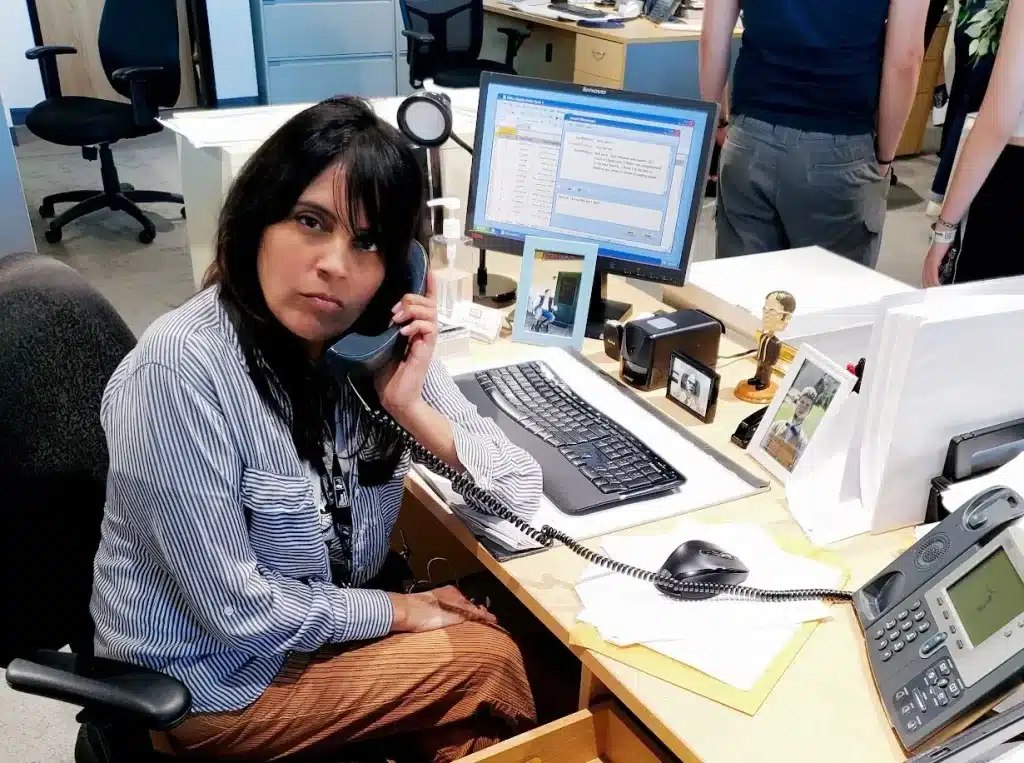
A piece on Business Insider described a similar spiral: you start with the online chatbot that can’t solve your problem, then you get pushed to the phone line where another “robot” greets you. It insists you explain yourself before letting you talk to a person. Meanwhile you get more frustrated, your tone gets more intense, and suddenly you’re stressed the F out.
Companies talk about how important customer service is, but they’re not using AI bots to make our lives easier. They’re using them ‘cause it’s cheaper than paying a person.
Two-thirds of consumers say they’d rather not deal with AI in customer service at all, and you can understand why.
So when I blow up at a phone bot, I’m yelling at a system designed to save companies money and keep me away from a human.
It’s a clear case of robots taking over jobs. I get it, but I don’t like it.
Do Humanoid Robots Change How We Treat Machines?
Yes, I think so. It’s one thing to yell at a faceless phone bot. It’s another to stand in front of a humanoid robot that appears to actually understand you.
I already have uneasy feelings about humanoid robots becoming too human—and so do a lot of other people.
I mean, have you seen Ameca, with her weird human expressions (and kinda Angelina Jolie-like face)? Or Sophia, the world’s first “robot citizen,” who once cracked jokes about destroying humanity? Girl, bye.
These robots aren’t going to be mistaken for real people, but they’re close enough to trigger what MIT professor Sherry Turkle calls our “Darwinian buttons.” Things like making eye contact or tracking your movements are examples that activate these instincts.
In Scientific American, Turkle also warns it can cut the other way: when we bark orders at machines, we risk carrying that tone into our human interactions. Some parents have noticed their kids snapping at people the same way they do at Alexa or Siri.
Are We Polite to Robots Because We’re Afraid of What They Might Do to Us in the Future?
Be honest. You know damn well the answer is yes.
This is where politeness starts to feel more like self-preservation and less like straight-up courtesy. Saying “please” to Alexa or Chat is force of habit. Saying “thank you” to a humanoid robot feels … inevitable and self-serving. Because what if, one day, they do start to care?
Honestly, this actually concerns me. It’s also the reason why about 12% of respondents to that Tech Radar survey are polite to AI: because they fear the future consequences.
When robots become so smart that they reach artificial general intelligence or (gulp) artificial superintelligence, I definitely want to be on record as one of the nice ones.
So, Should We Be Polite to AI and Robots?
Yes, you may as well. Robots don’t care, but being polite to them can still affect how they respond and how we treat each other.
Alexa doesn’t care if I say thank you. The DMV bot definitely didn’t care when I yelled at it. Humanoid robots aren’t losing sleep over whether we mind our manners.
But I care. And you probably do too.
Politeness keeps me grounded in a world that’s becoming more machine-driven every day. Even if I sometimes wonder about the energy cost of all those extra “pleases” and “thank yous,” the humanity of it all feels worth preserving.
So yes, I still thank Alexa, even when she cuts me off three-quarters of the way through. Not for her sake. For mine.