
Summary: Robots are helping humans in surprising ways. From disaster rescues and life-changing surgeries to greener farming and ocean cleanup, some machines are proving they can be good for humanity.
Key Takeaways:
- Not all tech is out to replace us—some robots are helping humans in ways that truly matter
- Robots are helping us in disaster zones, hospitals, farms, and even oceans
- Human creativity and robot capability might be a better match than we thought
I’ll be the first one to tell you I’m skeptical of robots. But after all the research and writing I’ve been doing for this website, I’ve become more curious about how robots can help us.
I’m not talking about home robots helping with chores or appointment reminders. And I’m definitely not talking about robots taking over our jobs and pretending it’s OK.
I’m talking about robots helping humanity in bigger, more meaningful ways. Because not every robot is here to steal our paycheck.
Some are helping first responders save lives. Others are reducing the use of pesticides, assisting with groundbreaking surgeries, and even picking up trash (bless them). In short, a few robots really are pulling their weight—and ours.
So, I figured why not share what I’ve discovered? Here are six examples of robots helping humans in ways that truly feel like progress.
1. Robots That Can Get Through Rubble and Rescue Survivors
Leave it to MIT (and the University of Notre Dame) to create a robot that behaves like a vine and slinks into disaster zones like it owns the place.
SPROUT is a 10-foot inflatable robot that unfurls like a bendy tube to explore tight, dangerous spaces beneath collapsed buildings.

With a camera and sensors mounted at its tip, SPROUT maps as it moves, sending back real-time footage and environmental data, so rescue teams can assess danger zones before going in.
While it’s still being tested, this tech could be a game changer for search and rescue teams that need smarter ways to work in brutal environments.
Another compelling example is the X30 quadruped robot dog by China’s DEEP Robotics, designed to operate in post-disaster zones where conditions are too risky for humans.
It can climb rubble, sense toxic gas, scout collapsed areas, and even haul rescue supplies to help firefighters and emergency crews.
2. Robots Helping People Move Again (Literally)
Not all robots are about automation and efficiency—some are about giving people a second chance at moving through the world.
One of the biggest breakthroughs is the use of wearable exoskeletons to help people walk again after paralysis. French startup Wandercraft developed one that helped Paralympian Kevin Piette carry the Olympic flame through the streets of Paris in 2024.

Meanwhile, in Sweden, researchers have taken prosthetics a step further. A woman who lost her arm in a farming accident is now using a bionic limb connected directly to her nervous system. The robotic arm responds to her brain signals, allowing her to move it with intention and precision. She even reported the disappearance of phantom limb pain, saying “It’s given me a better life.”
3. Robots Helping Farmers Grow Cleaner, Greener Food
Tired of fields soaked in chemical cocktails? Yeah, me too. Thankfully, some robot makers are doing something about it.
In Kansas, a company called Greenfield is rolling out bright-yellow battery-powered robots across farms. These machines patrol rows of crops, slice away weeds, and do it all without spraying a drop of pesticide.

Meanwhile, MIT alum-founded FarmWise built a Titan FT‑35 robot resembling a small tractor that snips weeds mechanically. No chemicals, no human labor, just surgical removal powered by AI vision.
Reports show MIT’s original concept “eliminates the need for herbicides” on vegetable crops like lettuce and spinach.
These agricultural robots are tackling urgent environmental and health issues by replacing toxin-heavy methods with effective, low-impact alternatives.
4. Robots That Help Surgeons Save Lives
Robot-assisted surgery has been happening for years, and the tech just keeps getting better.
The Versius Surgical System in the UK recently helped doctors treat a 7-year-old boy’s kidney condition. The procedure was minimally invasive, which meant less cutting, faster healing, and a shorter hospital stay. That’s a win in anybody’s book.
Then there’s da Vinci Systems, one of the most widely used surgical robots in the world. It gives human surgeons more precision, better range of motion, and fewer errors, especially during delicate procedures where a shaky hand isn’t an option.
These machines aren’t replacing doctors. They’re giving them tools to do their job even better.
Yeah, the idea of robots near your vital organs might sound unnerving at first. But when it comes to something as high-stakes as surgery, you want every advantage you can get.
5. Slimebots That Could Save You from Swallowing Something Stupid
Yes, this robot looks like something Nickelodeon left behind. But don’t let the ooey-gooey glob fool you. This magnetic slimebot from the Chinese University of Hong Kong was designed to slither inside the human body and retrieve foreign objects.
The soft robot is made of slime mixed with magnetic particles and coated in a silicone layer to make it safe for use inside people. The idea is that doctors could one day guide the bot remotely using magnets to grab and pull out objects that otherwise require surgery.

According to its creators, “Compared to conventional endoscopy intervention, which can only grab a bigger single object at once, slimebot can go where endoscopes can hardly reach and retrieve much smaller objects the size of bread crumbs.”
It’s still in early stages, but it’s part of a growing trend of robots helping humans in places we couldn’t otherwise go.
6. Robots Helping Humans Clean Up Our Oceans
Trash in our oceans is an ecological crisis. Enter ClearBot, a small, autonomous workboat designed to combat floating garbage and minor oil slicks in our oceans.
Launched in 2024, ClearBot uses solar-powered sensors and an onboard scooping system to navigate coastal areas and inland canals, scooping up plastics, surface debris, and even oil traces, all without human drivers.
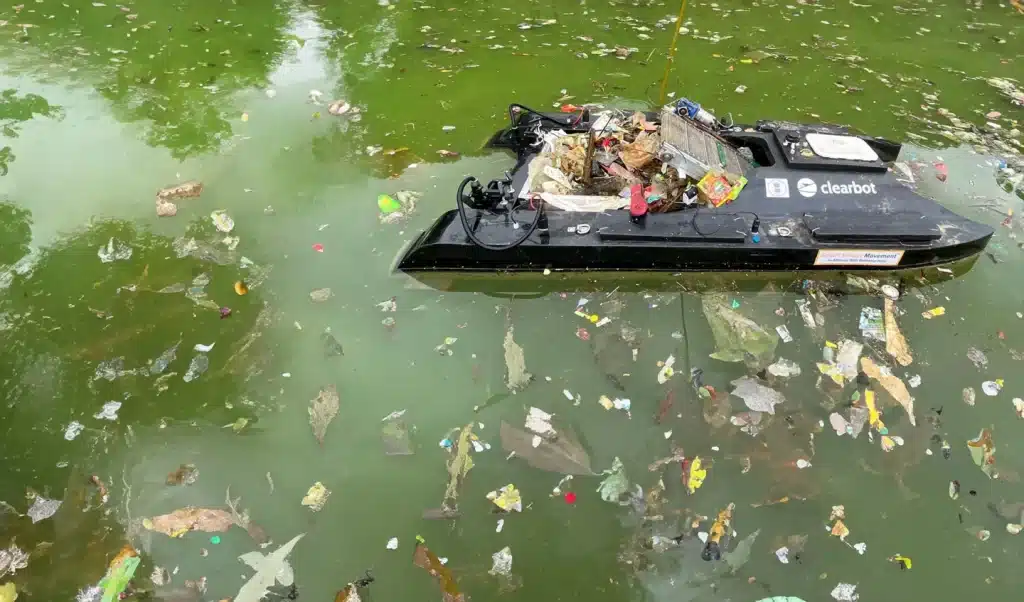
In early trials, it removed hundreds of pounds of trash from polluted harbors, offering a scalable, low-cost cleanup crew you didn’t know we needed.
As waste continues to choke our rivers and oceans, ClearBot-like fleets could start handling this yucky work while freeing humans to focus on long-term solutions.
Are Robots Really Helping Humans?
Yes, some robots are genuinely helping humans in meaningful ways.
Sure, there are bots that scan job resumes before a human ever sees them and others that might be spying on you. But there are also robots doing real good deeds, and honestly, I’m here for it.
In the right hands (and for the right reasons), robots can support the kind of future most of us actually want to live in. A future where more people survive disasters, doctors operate with greater precision, and we get rid of toxic farming.
That doesn’t mean we stop asking whether robots are good or bad for us. It just means we don’t miss the good stuff while keeping an eye on the scary stuff.